

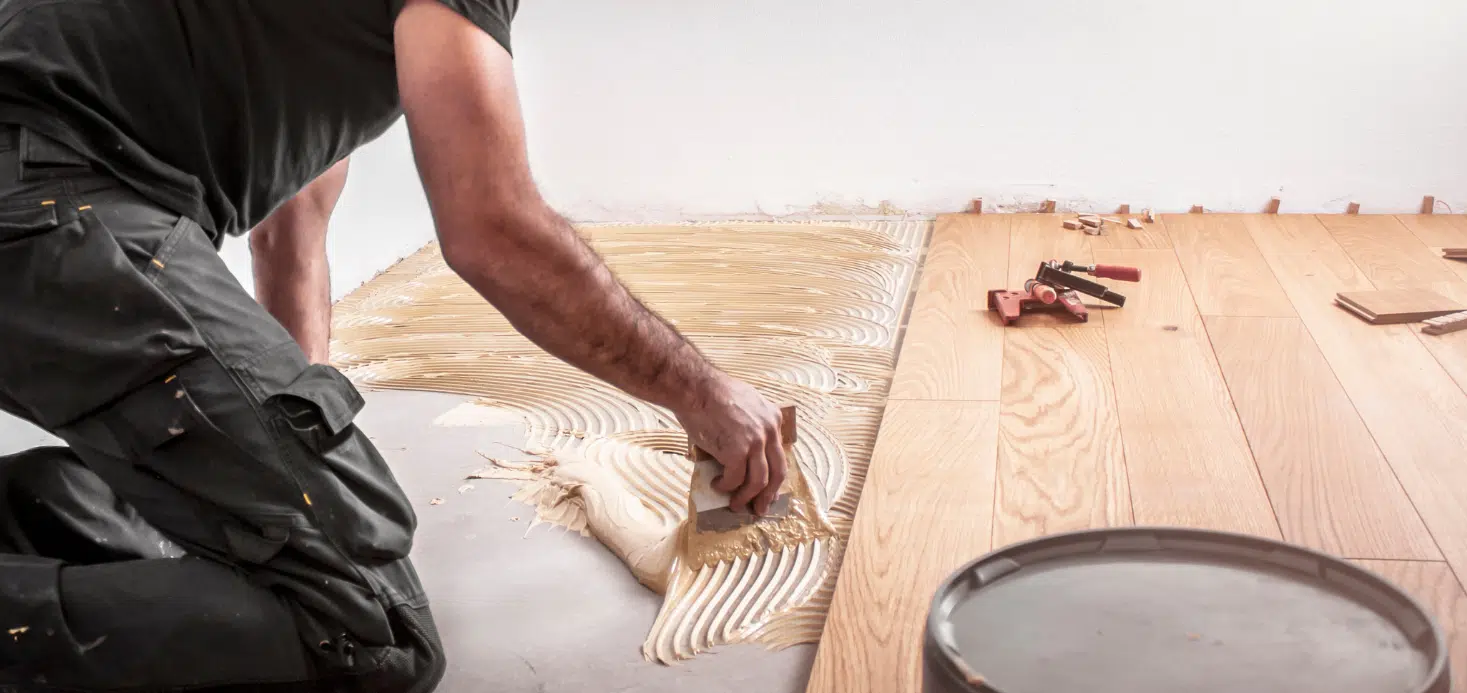
The adhesive matters less for how it’s marketed and more for three things: your install method, your substrate, and how much moisture protection the job needs.
Get those three right, and almost any adhesive on this list will hold. Get them wrong, and even the most expensive pail won’t save the install.
We stock a full inventory of specialty adhesives, tubes, pails, and removers.
This guide narrows that catalog down to the products our contractors reach for most, organized by the situation you’re actually solving for.
Quick Picks: Best Wood Floor Adhesive by Situation
Prep the Subfloor Before You Choose a Wood Floor Adhesive
Adhesive selection starts before you open a pail. The subfloor needs to meet the manufacturer’s requirements for thickness, joist spacing, flatness, and moisture, and it needs to be clean and free of anything that would keep the adhesive from bonding.
Homeowners tend to see subfloor prep as an invisible cost. It’s tempting to skip it. A contractor who explains what’s involved and prices it into the job avoids the callback that shows up three months later.
Follow the flooring manufacturer’s subfloor guidelines first. The adhesive’s technical data sheet is the second reference, not the first.
Control the Moisture
Moisture is the single biggest cause of a failed glue-down install.
Left unmanaged, it warps boards, feeds mold, and turns into a callback you don’t get paid for.
Some adhesive data sheets claim moisture testing isn’t necessary. That claim won’t protect you if a moisture problem shows up after the floor is down.
The NWFA recommends testing both the subfloor and the flooring for moisture before installation and documenting the results.
That documentation does three things: it lowers your risk of moisture damage, it satisfies the flooring manufacturer’s warranty requirements, and it’s your protection if a dispute comes up later.

Choosing the Right Trowel for the Job
A trowel meters out a specific volume of adhesive so the ridge height matches what the manufacturer engineered the product around.
Follow the adhesive manufacturer’s trowel recommendation, not a generic notch size.
Retire old trowels.
Worn notches change the flow rate, and a floor that looks fine at the ridge but starves for adhesive underneath is a floor that will eventually pop or creak.
Trowel size and notch profile are both listed on the product’s technical data sheet, so check it before you buy the adhesive, not after.

Best Wood Floor Adhesives We Carry
These are the products our contractors trust most, broken down by what each one is actually built to do.
Best Overall: Wakol-MS-260
Wakol MS-260 is the adhesive we recommend first for most glue-down hardwood jobs, and it’s in stock right now while several of its competitors sit on backorder.
The MS-polymer formula cures to a firm but flexible bond that lets wood move naturally through seasonal humidity swings.
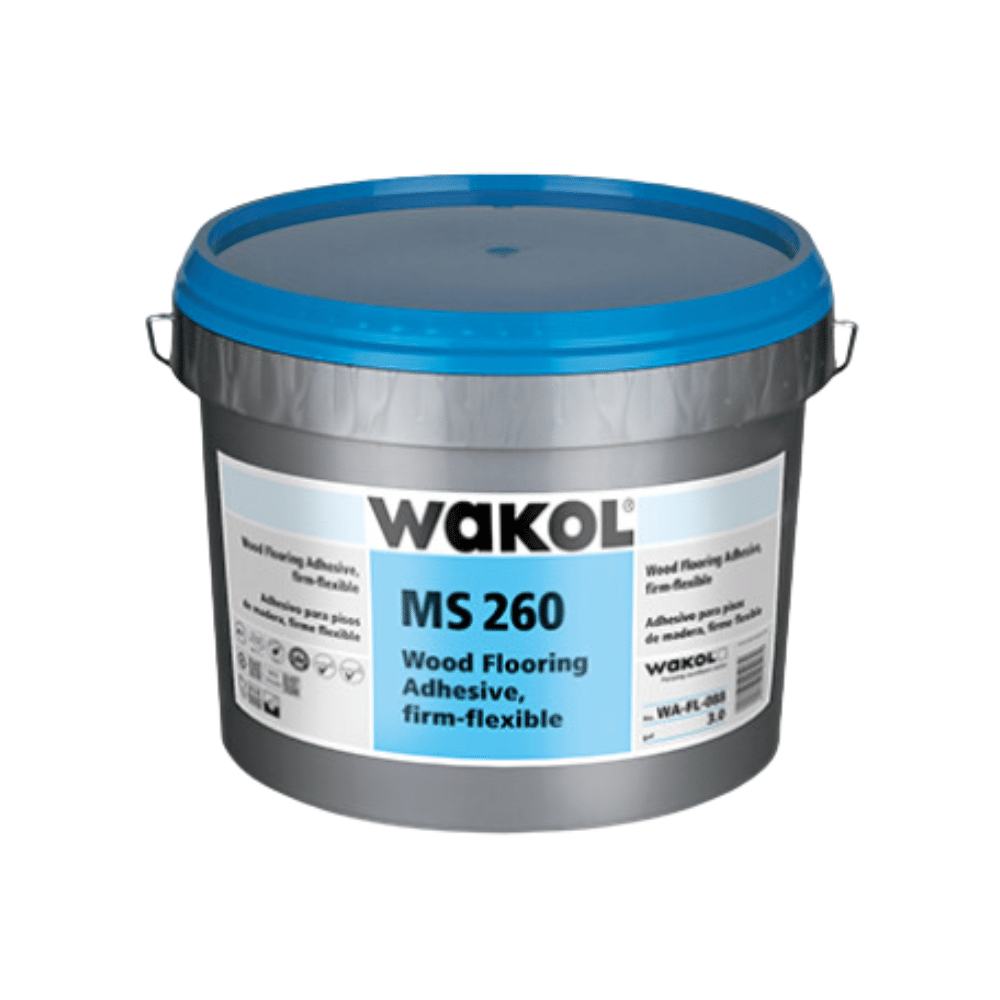
And it does that at 0 g/L VOC with EMICODE EC1 Plus certification.
It bonds well across a range of substrates, provides moisture protection up to 100% relative humidity with no waiting time before you install, and carries documented sound ratings up to STC 67 and IIC 73.
That last spec is worth stopping to think about: MS-260 delivers the sound control numbers that usually require a dedicated system product.
Open time runs about 40 minutes. The floor takes light foot traffic after 6 to 8 hours and full traffic within 24 to 48.
For slabs where the spec calls for a dedicated moisture barrier under the adhesive, Wakol PU-280 is the matching barrier.
Who it’s right for: Most full-trowel glue-down jobs, and especially wide-plank installs where a flexible bond earns its keep.
Best Overall Co-Pick: Bona QUANTUM FLOW
Bona’s QUANTUM line splits the top spot with Wakol MS-260. Both FLOW and R851 are silane-based and zero-VOC.
Both are ready for foot traffic in 24 hours.
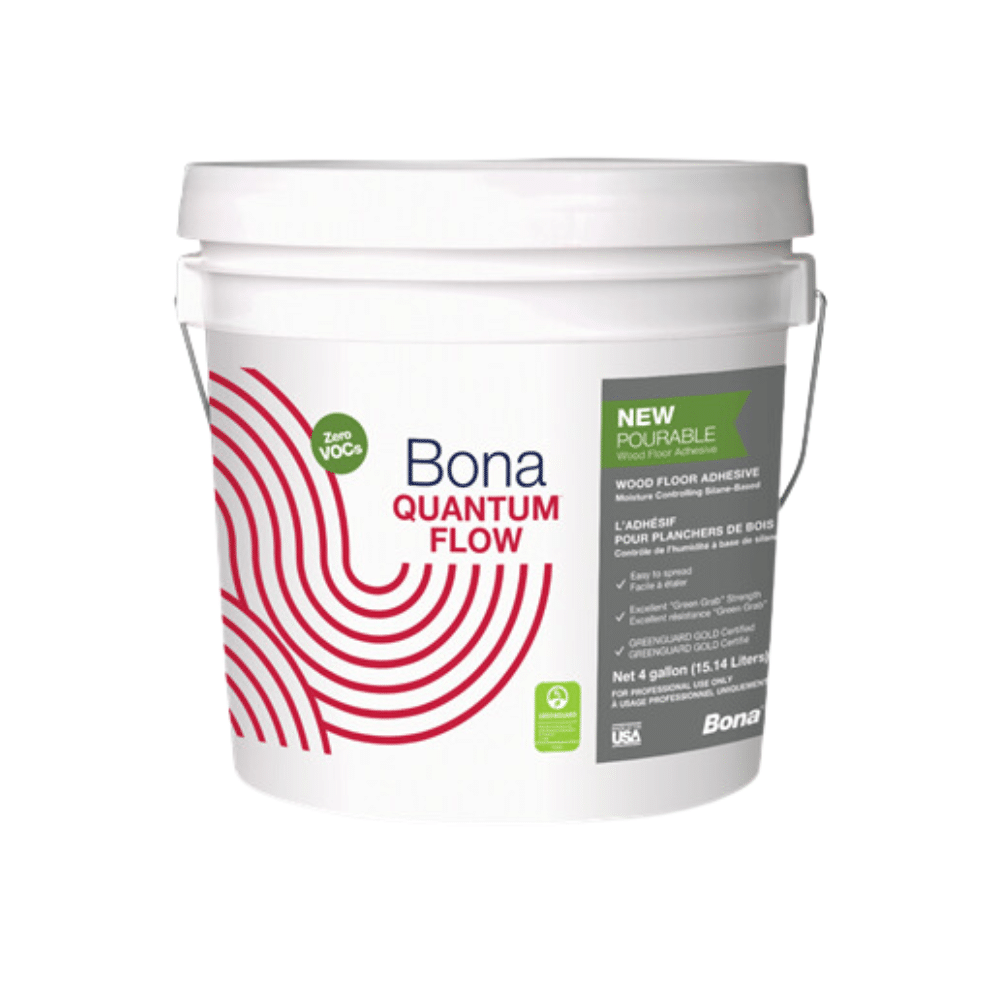
And they’re the only GREENGUARD Gold-certified adhesives in this guide.
If the job spec calls for the strictest indoor air quality certification on the market, QUANTUM is the pick of the pair.
FLOW comes in a pourable 4-gallon pail built for larger jobs and faster application with less fatigue on the crew. R851 is a one-component 3-gallon formula with the same green grab and easy cleanup, sized for smaller rooms.
Neither formula contains chemicals that etch prefinished flooring, so cleanup with a microfiber cloth after the adhesive dries won’t damage the boards.
Who it’s right for: Homeowners or job specs that require the strictest indoor air quality standard on the market.
Best Urethane: Titebond 811 Advantage
Titebond 811 Advantage is our top urethane pick, built for full-trowel glue-downs on parquet, engineered, solid plank, and sports flooring.
The urethane formula gives you enhanced green grab and strong bond development, so the floor sets fast enough to keep a crew moving.
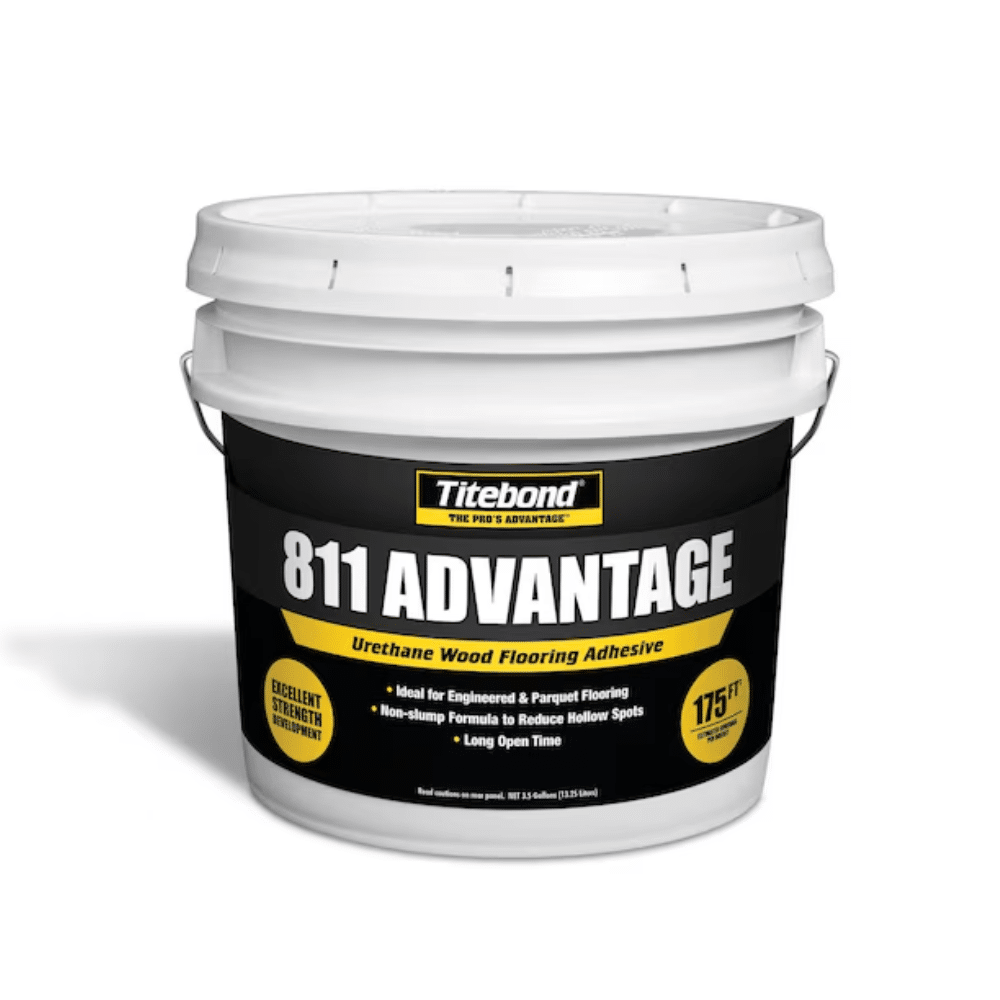
It’s also compatible withTitebond Moisture Control Systems if the subfloor needs additional protection, and it supports both wet-lay and flash installation depending on how your crew prefers to work.
This moisture-resistant adhesive gives you the option to use wet lay or flash installation.
With less than 20 g/L VOC’s, this FloorScore® certified formula is easy to trowel.
The sausages give you the utmost convenience on different jobsites. All you need to do is place the adhesive sausage on the subfloor, cut the end, squeeze it out, then spread and trowel.
This saves you money and allows for faster application.
Who it’s right for: Contractors running a standard glue-down job who want a proven urethane bond at a fair price.
Best for Nail/Glue-Assist: Loctite PL Premium
For nail/glue-assist installs, Doug, one of our flooring pros, reaches for Loctite PL Premium first.
It’s not a flooring-specific formula. That’s exactly why it works so well on a mixed jobsite: the same tube bonds subfloor panels, trim, and transitions.
Loctite PL Premium is a single-component urethane construction adhesive that’s excellent for flooring.
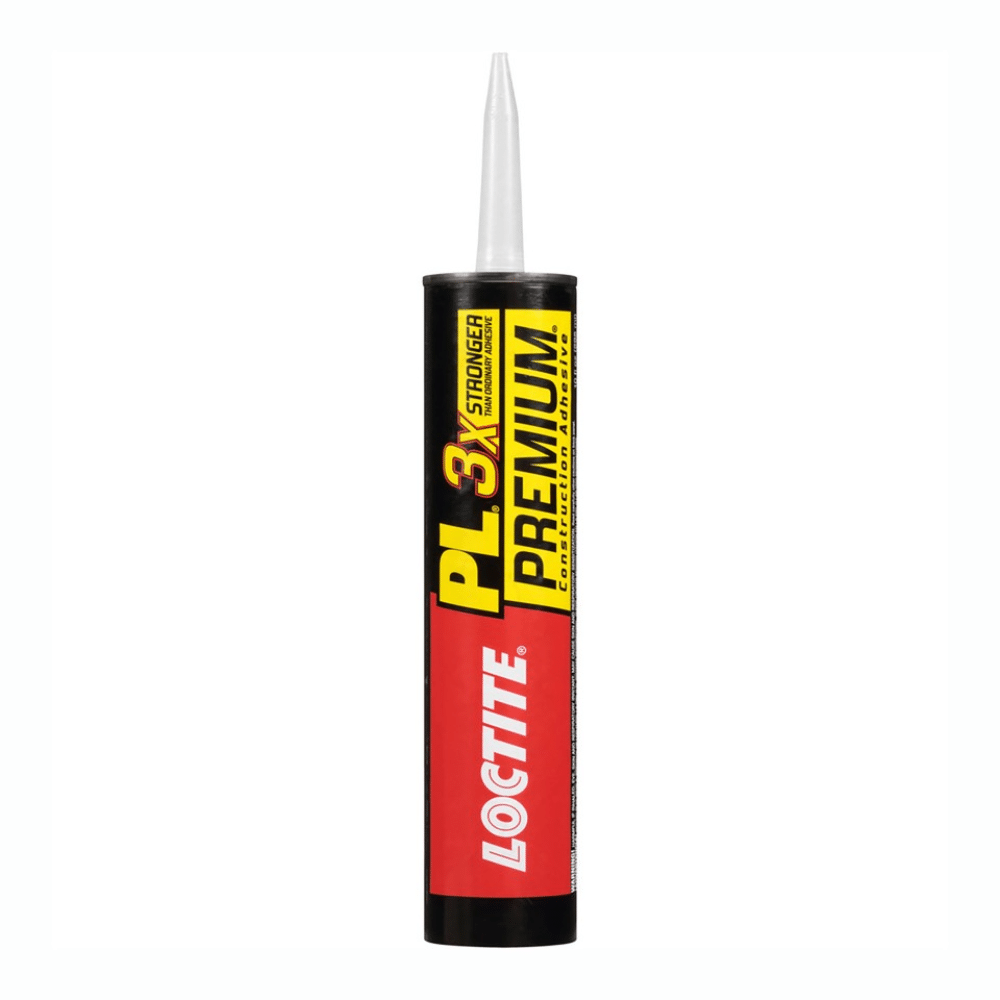
It’s a one-component, moisture-curing polyurethane rated at three times the strength of an ordinary construction adhesive.
It sets in 30 minutes and fully cures in 24 hours, and it will bond to wood, OSB, drywall, brick, concrete, masonry, stone, foam, metal, and PVC.
It also applies to wet or frozen surfaces.
That matters more than people expect on a cold jobsite in early spring.
Who it’s right for: Nail/glue-assist installs, subfloor fastening, and any job where you’d rather carry one adhesive than three.
Best for Trim, Treads, and Vertical Work: Bona Vertical (R880)
Bona Vertical is built for the parts of the job that flooring adhesive isn’t designed for: stair treads, risers, starter rows, and any vertical surface where a standard formula would slump before it sets.
The silane-based formula bonds to PVC, LVT, metal, and acrylic paint in addition to wood.
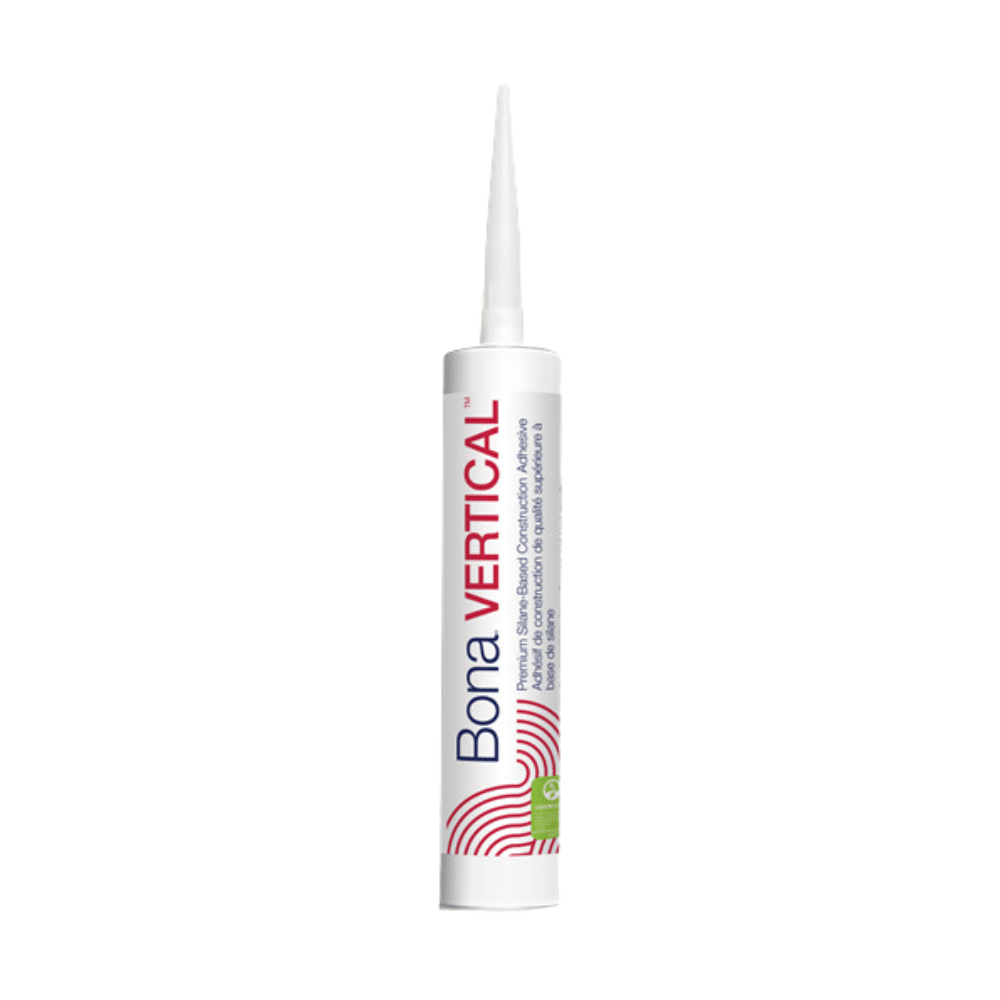
Bona rates it at 300% improved green grab with more than 10% better shear strength than its predecessor.
Many contractors use it to glue down treads and risers without fasteners at all.
There’s no limitations to what it can glue down.
Vertical fits 10.2 oz standard caulk guns and is great to have because it will help you out in many different situations.
Additionally, this product is great for double glue down because it gives you the same shear strength for your underlayment and for your wood.
Who it’s right for: Stair installs, trim work, and any vertical bond where slump would ruin the job.
Best for Moisture and Sound Control: Titebond 771-Step
Titebond 771-Step combines a glue-down bond with a moisture and sound control membrane in a single application.
That’s the appeal for solid wood, bamboo, cork, and engineered hardwood jobs where you would otherwise need two separate products.
Titebond 771-Step is an advanced polymer adhesive for hardwood floors.
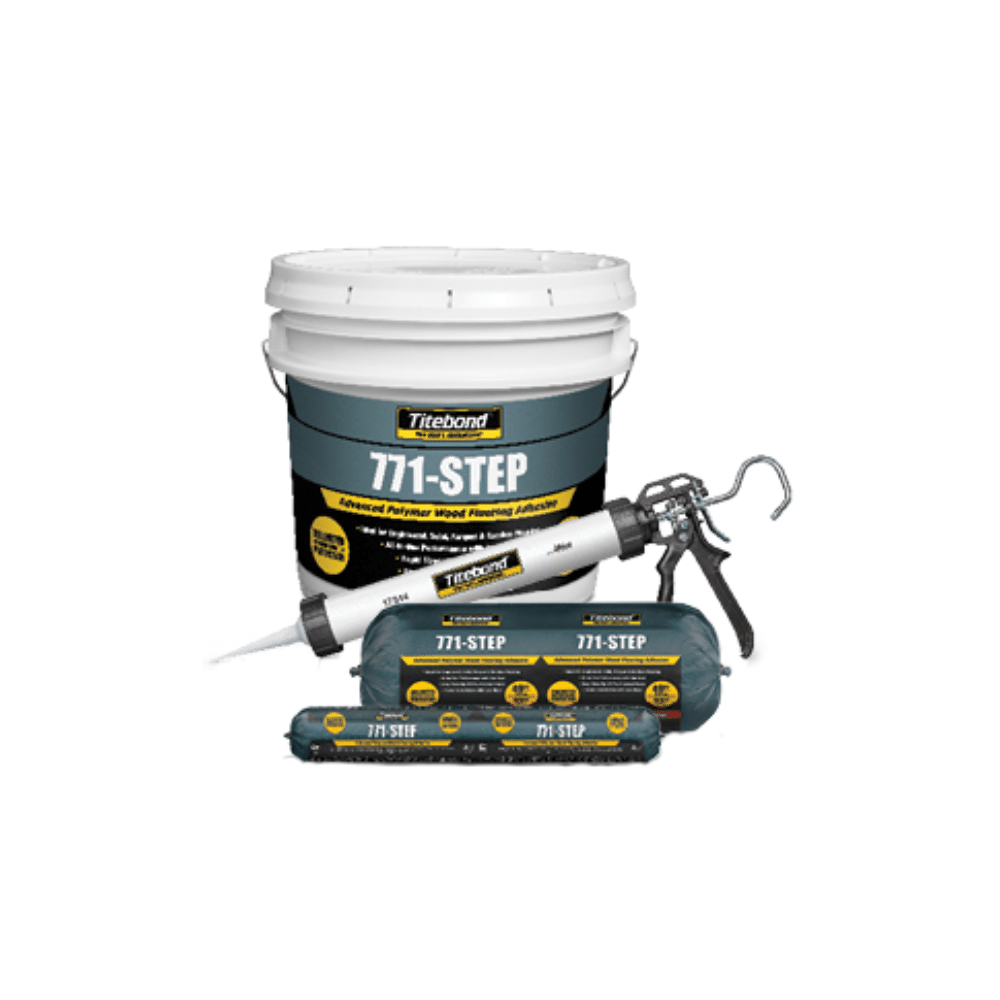
It’s 100% solids with 0 g/L VOC (under 50 g/L during cure), and it carries sound ratings of IIC 69 and STC 67 for multi-family and commercial jobs where noise transmission is part of the spec.
Working time runs 25 to 45 minutes depending on humidity. Pair it with Titebond 531 if the job needs unlimited moisture protection.
Who it’s right for: Jobs where the spec calls for both moisture protection and a sound rating, without stacking two separate products.
Best for Non-Absorbing Substrates: Vermeister Underwood ZERO%
Most flooring adhesives are built for concrete or plywood. Underwood ZERO% is built for the substrates that aren’t: ceramic tile, stoneware, marble, and other non-absorbing surfaces where a standard adhesive won’t get proper grab.
Vermeister ZERO % is an advanced two-component epoxy polyurethane designed for the modern contractor.
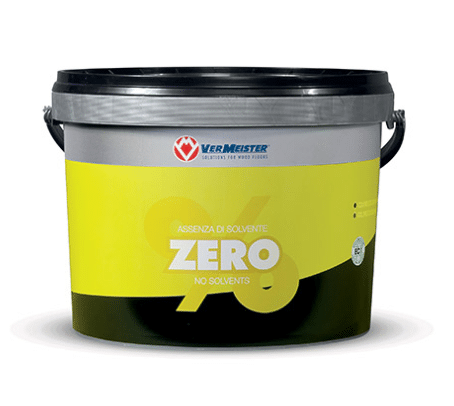
It’s a two-component epoxy polyurethane with a 2-hour pot life and a 60-minute open time.
The floor is ready for traffic in 24 to 48 hours and sandable after 3 days. EC1 certification confirms low emissions, and the formula is odor-free before and after mixing.
Engineered with cutting-edge rheology, Underwood ZERO % makes application both efficient and precise.
Its completely odor-free formulation, both before and after mixing, provides an ideal working environment while promoting healthful indoor air.
Who it’s right for: Jobs gluing hardwood over ceramic tile, stoneware, marble, or other non-absorbing surfaces.
Adhesive Chemistry: What the Base Actually Means
Most adhesive marketing leads with VOC (volatile organic compound) content and certifications. Those matter, but the base chemistry is what determines how the adhesive actually performs on your subfloor.
Urethane
Adhesives (Titebond 811 Advantage, Titebond 771-Step, Bostik’s Best) cure through a chemical reaction with moisture in the air and the subfloor. They build a strong, somewhat rigid bond and have a long track record on solid and engineered hardwood.
Silane-based and MS-polymer
Adhesives (Wakol MS-260 and MS-262, the Bona QUANTUM line, Bona Vertical) cure to a bond that stays more flexible after it sets. That flexibility lets wide-plank flooring expand and contract with the seasons without stressing the bond line, and it’s why these formulas dominate the zero-VOC and GREENGUARD Gold segment of the market.
Epoxy polyurethane
Vermeister Underwood ZERO% is the specialist option. It’s built for non-absorbing substrates where the other two chemistries won’t get proper adhesion, at the cost of a shorter pot life and a more involved mixing process.
None of these is universally better. The substrate and the moisture situation decide which chemistry is right for the job.
Other Adhesive Brands Worth Knowing About
We don’t carry these, but DriTac, Mapei’s Ultrabond line, and Sika come up constantly in contractor forums for urethane and moisture-control systems.
If you already have an account with one of those suppliers, there’s no reason to switch just for this job.
Compare their technical data sheet against the products above on VOC content, open time, and moisture protection before you decide.
FAQ
What is the best glue for hardwood floors?
For most glue-down jobs, the best options we carry are Wakol MS-260 and the Bona QUANTUM line. Both are silane-based, zero-VOC formulas that stay flexible enough for wood to move naturally. For non-absorbing substrates like tile or stone, you need a specialist product like Vermeister Underwood ZERO%.
Do you need adhesive for engineered hardwood?
It depends on the install method. Floating engineered floors don’t need adhesive at all. Glue-down and double-glue-down installs do, and the adhesive should match the manufacturer’s approved list to keep the warranty intact.
Is urethane or silane-based adhesive better?
Neither wins outright. Urethane has the longer track record and a strong, rigid bond. Silane-based (MS-polymer) formulas stay more flexible after curing. That suits wide-plank flooring that moves more with humidity, and these are the formulas behind most zero-VOC and GREENGUARD Gold certifications. Match the chemistry to the plank width and the air-quality requirement, not to brand reputation.
How much wood floor adhesive do I need per square foot?
Coverage depends on the trowel notch size specified in the technical data sheet, not a flat rate you can apply across products. As examples: Titebond 811 Advantage covers about 175 sq ft per 3.5 gallons with a 3/16″ x 1/4″ V-notch trowel, and a 20 oz. tube of Wakol MS-262 covers about 9 sq ft in beads. Always check the specific product’s data sheet before ordering.
Summary
Wood floor adhesive is doing more work in installations now than it used to, especially as wide-plank flooring pushes contractors toward full-trowel and double-glue-down methods.
The adhesive you pick affects how fast the crew moves today and whether the phone rings with a callback next year.
Start with the install method and the substrate. Layer in the moisture and sound requirements.
Only then compare brands. Wakol MS-260 and Bona QUANTUM are the two best all-around adhesives we carry, and MS-260 is the one you can get today.
As of July 2026, three of the products in this guide (Titebond 771-Step, Vermeister Underwood ZERO%, and Bostik’s Best) are out of stock and the Bona QUANTUM line is on backorder, so call the Pro Shop if you’re interested in one of these products.


