Kitchen reflooring is one of the most important home-improvement projects you can take on.
Choosing the right floor is a major investment in your home and your daily life.
You walk on your kitchen floor every day. You raise your kids on it, use it to prepare meals, and depend on it more than almost any other part of the house.
The right kitchen floor supports your life. The wrong floor just creates problems.
This guide walks you through the entire kitchen reflooring process: how long it takes, the mistakes homeowners make, how different materials perform, product recommendations, 2026 trends, and how to choose a floor that you will appreciate for life.
When you take the time to learn the process and work with the right salesperson and installer, you eliminate surprises and end up with a floor you truly love.

Planning Your Kitchen Reflooring Project
Good planning is the foundation of a smooth reflooring project. When you understand the timeline and what to expect, the entire process becomes easier and far more enjoyable.
How Long Does Kitchen Reflooring Take?
Most kitchen reflooring projects take two to three weeks, depending on the product and the installation schedule.
There are rare cases where someone will install a floor the same or next day, but this isn’t recommended. Moving that fast usually means skipping the two most important steps:
- The selection process where you compare floors and bring samples home
- The acclimation period, which affects stability and longevity
Skipping either one makes for a challenging process that can lead to problems.
What Makes a Kitchen Reflooring Project Successful?
One of the questions we ask during every project:
Is the customer still loving the process?
The customers who end up happiest are the ones who:
- Take their time and explore their options until they find the one
- Bring samples home
- Understand the logistics and installation process
- Know what to expect at every step
When you’re educated up front and you fall in love with the floor before you buy it, the entire project becomes a meaningful experience.
Common Mistakes People Make
There are a few mistakes people make when they begin a kitchen reflooring project:
- Rushing through the decision
- Not taking samples home
- Not learning about the floor’s construction or how it’s installed
- Trying to save money by sacrificing quality
- Choosing a high-quality floor but pairing it with an inferior installation
Take engineered hardwood, for example. If the product is made to be glued down with full-spread adhesive, but you decide to avoid the glue cost, the floor loses its performance features.
It may still look nice, but you will hear more cracking and popping when anyone walks on it.
Understanding Floor Quality
Flooring comes in tiers, just like hamburgers.
- A builder-basic floor in a new home is like a $0.99 hamburger with a thin patty and two pickles. It’s okay, but there’s not much to it.
- A mid-range floor is your quarter-pounder—better build, better performance, a step up.
- A premium floor is the big, signature burger —the most substantial and satisfying.
Many customers close on a house and replace the floors before moving in because they’re starting out with the “99-cent burger” version.
Others reach the three-year mark and realize their floor has become a chore to clean, isn’t durable enough, or isn’t meeting their lifestyle needs.
That’s usually the moment when people begin looking seriously at kitchen reflooring and finding a floor that truly fits how they live.
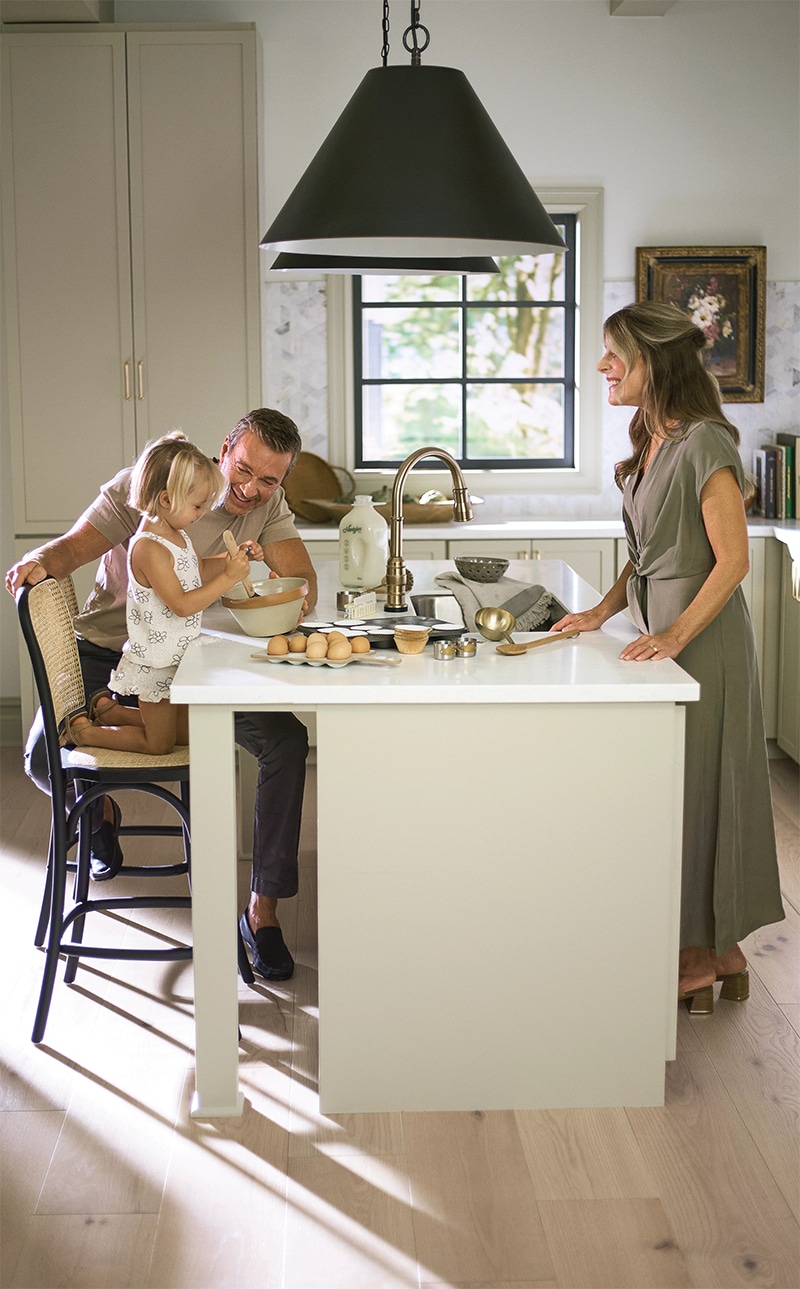
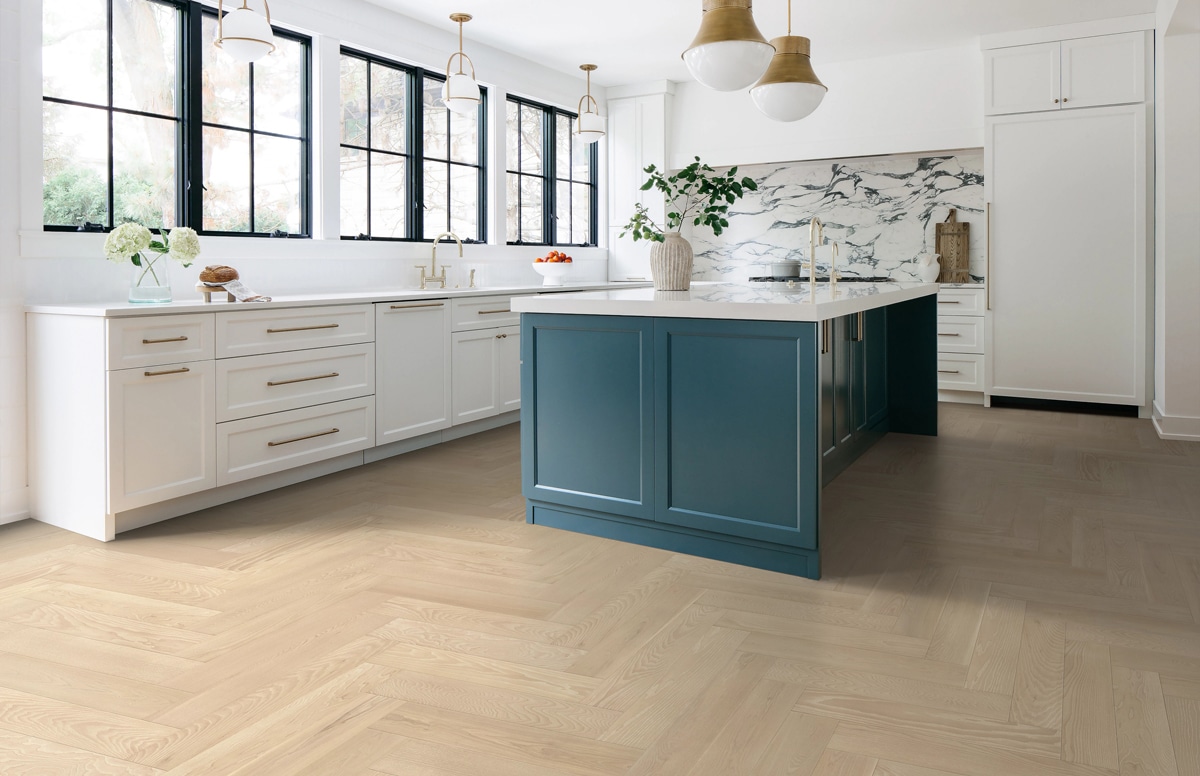
Best Flooring Options for the Kitchen
With today’s products, there’s no limitation on hardwood, vinyl, laminate, or ceramic tile in the kitchen.
Your lifestyle determines which floor makes sense.
If you are often cooking, spilling water, and have the habit of not cleaning it up, ceramic tile is going to be your safest option.
If that doesn’t describe you, then there are no limitations to the flooring you can have in your kitchen.
Hardwood
Hardwood is the ultimate floor.
It’s always going to be the go-to because it’s a lifetime floor. Once you put it down, people can use it for generations.
You can refinish it. You can recoat it. And if you sell your house, the next owners can sand and change the color of the floor. This leaves them with many options.
You can choose real hardwood or a wood imitation, such as laminate or vinyl. Hardwood flooring can be installed anywhere in the house except the full bath.
What to Look for in Engineered Hardwood
When you buy engineered hardwood, make sure it has a thick wear layer (3 -6mm) so it performs like a solid floor.
Choosing a Sheen
- Higher sheen shows more wear.
- Lower sheen hides traffic and daily use.
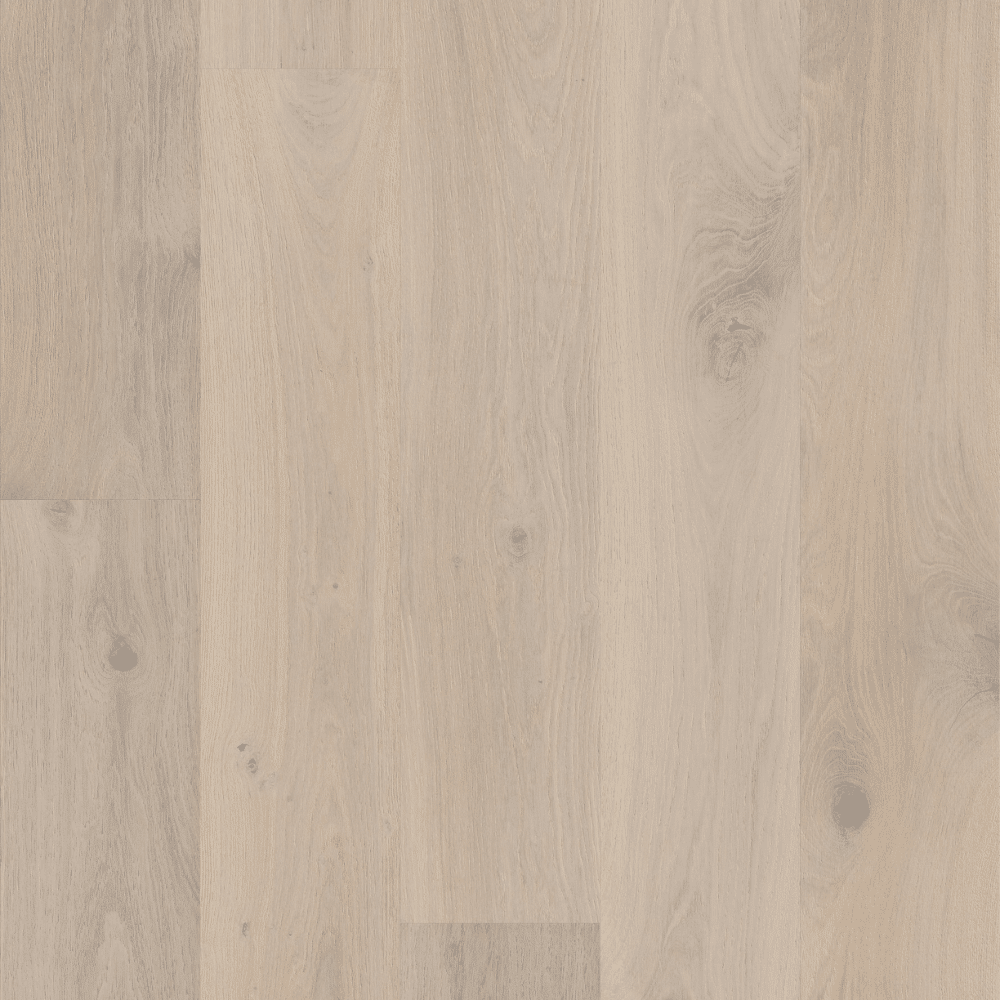
Lower-sheen finishes are excellent in kitchens for their natural look and ability to hide wear.
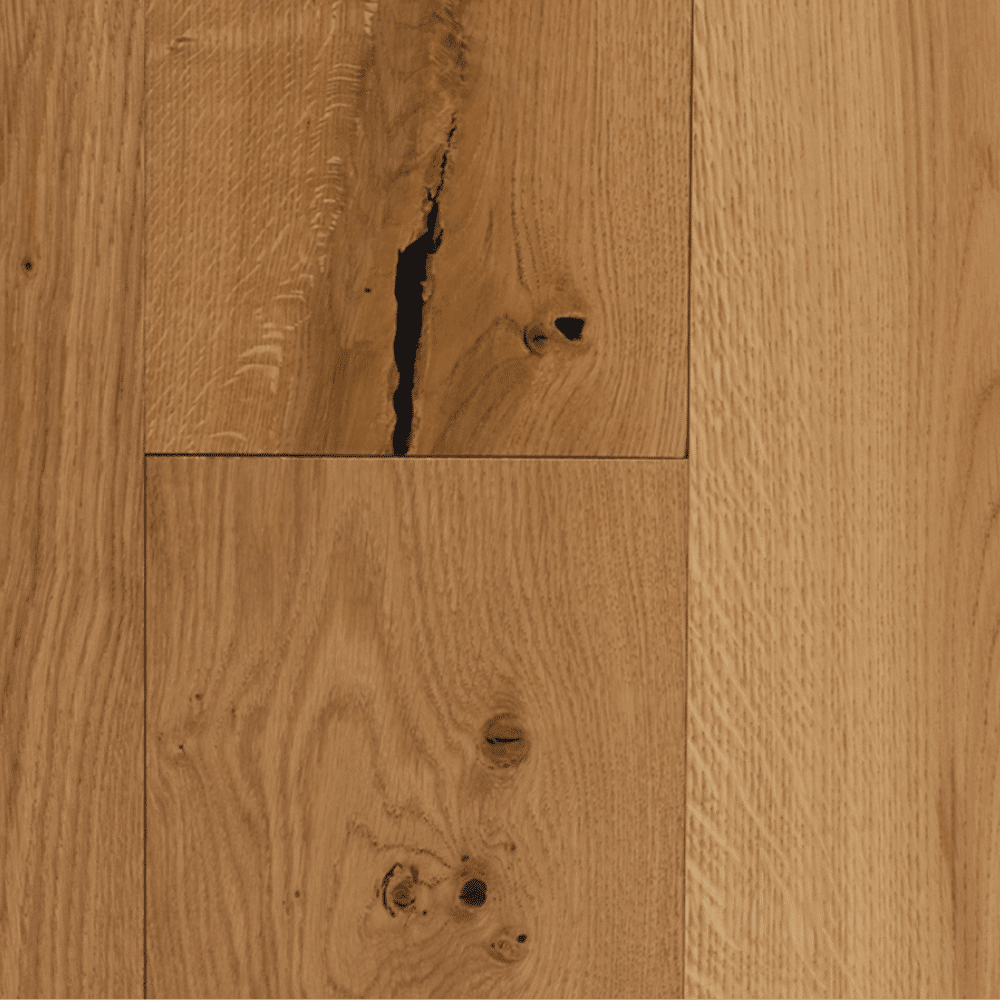
Collections like Anderson Tuftex Chateau and Grand Estate offer high-quality prefinished hardwood with a UV-cured oil sheen.
Mullican’s Bellême collection features engineered hardwood with a refined, ultra-low-gloss finish that delivers a similar matte aesthetic.
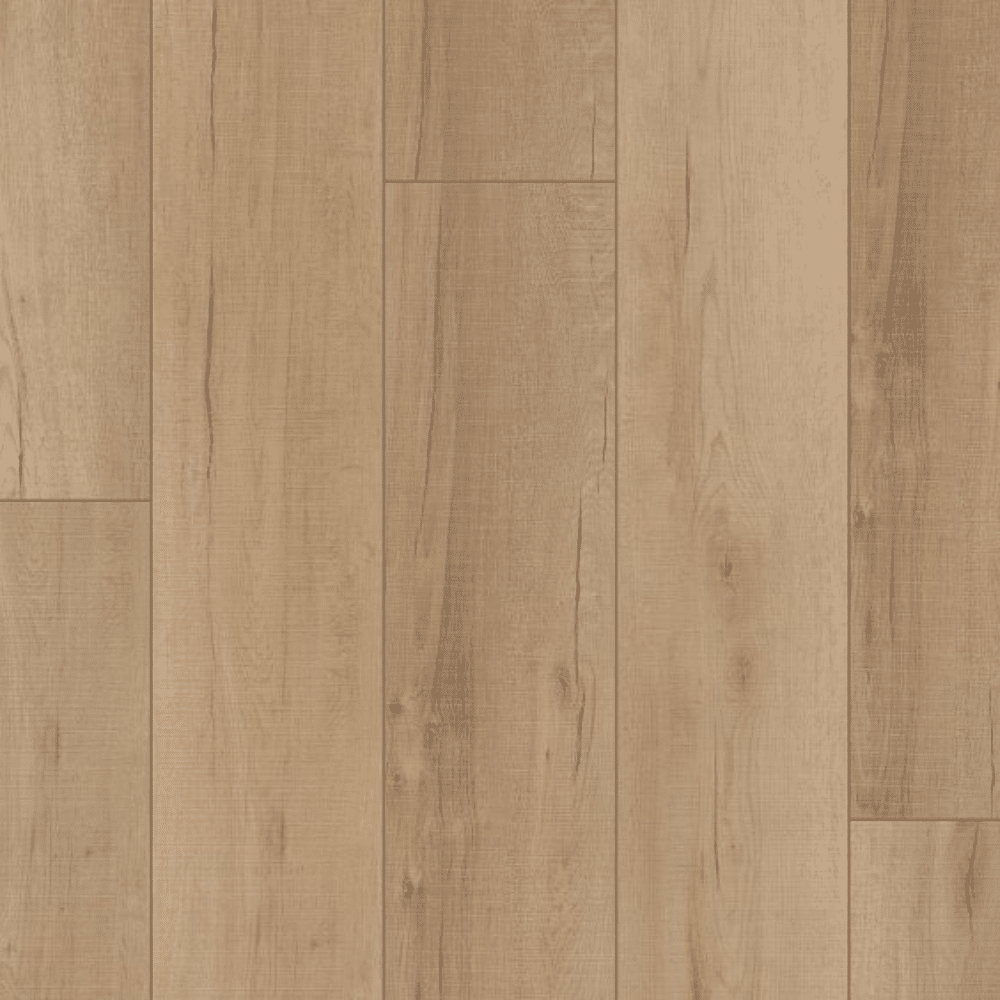
Vinyl and Laminate
Traditionally, most people want hardwood first. Their second choice is LVP or laminate.
The two most important aspects of a vinyl floor are:
- Wear layer thickness
- Overall product performance
We recommend vinyl products with a wear layer of 12-30 mils. With laminate, we recommend at least an AC rating of 4.
Browse our collections of waterproof flooring.
Tile
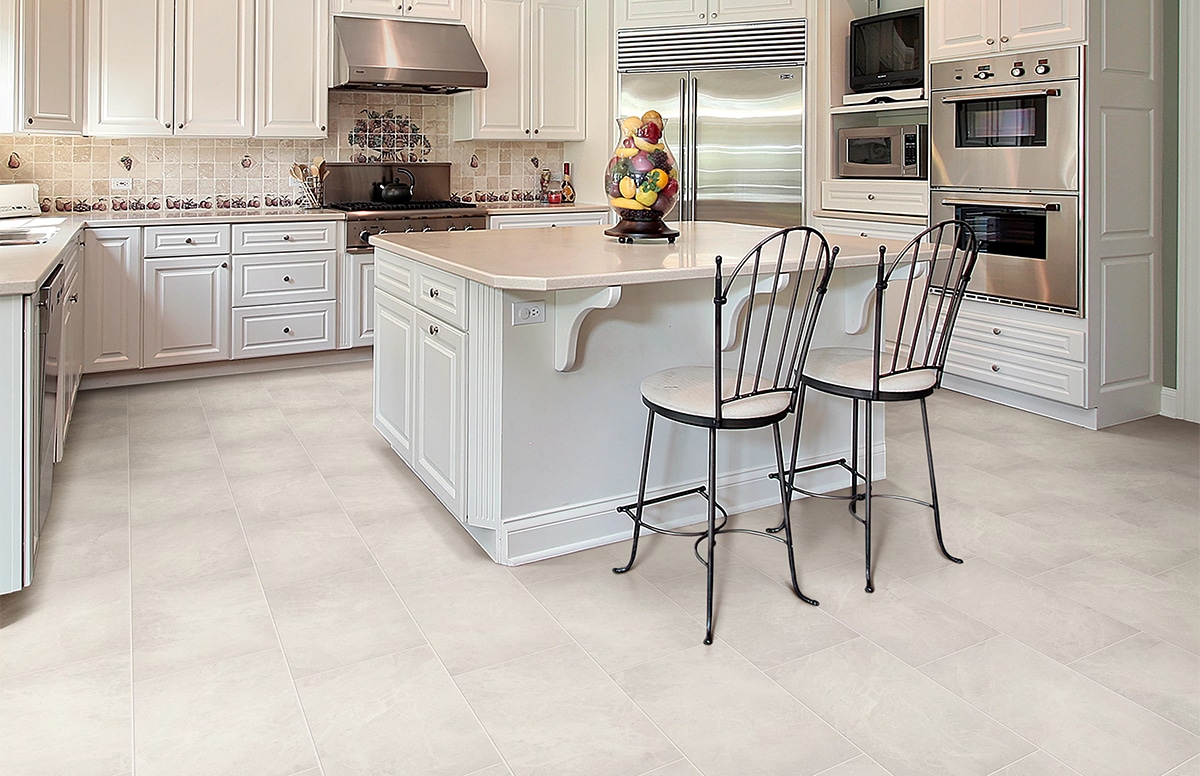
Tile is, in many ways, a traditional kitchen floor from the past. Older kitchens had more involved cooking, dishes were washed by hand, and you could expect there to be more water splashing around. Tile handled that environment well.
Today:
- Most people use dishwashers.
- Cooking habits have changed.
- Flooring technology has evolved.
You now have waterproof vinyl, laminate, and hardwood options that can match or outperform tile.
Tile has cultural ties, especially in Middle Eastern and Asian households where heavy cooking and water use are common. Tile still makes sense for people who cook heavily or use a lot of water, and in spaces where moisture or standing water is a regular part of daily life.
But tile has drawbacks:
- It requires building up the subfloor.
- It’s cold without radiant heat.
- Grout stains and needs detailed cleaning.
- Cracked grout and tiles require repair.
Tile use has dropped significantly. It makes up a low percentage of what people choose for their kitchen floor. But it still has a place in showers, steam rooms, and certain climates where humidity isn’t controlled.
How to Choose the Right Kitchen Floor
The right kitchen floor reveals itself when you explore real samples and give yourself time to fall in love with the one that belongs in your home.
 Make a Connection
 Make a Connection
Choosing a floor is like choosing a partner. There has to be a connection between you and the floor.
Falling in love with it takes time, but you know when it happens.
Use High-Quality Samples
The best way to make a connection with your floor is to set aside time to explore different floors. Bring samples home and look at them at different times of day and under different lighting.
We encourage people to take sample boards home and lay them out in their space to see how the floor blends with cabinets, woodwork, and décor.
Most hardwood samples are too small. A 4–6” piece doesn’t show enough of the wood.
You’re dealing with the beauty of nature—what God has created. A tiny piece doesn’t tell the whole story.
At Panel Town & Floors, we offer large hardwood samples for people to check out, and we have 4′ x 4′ floor displays in our showroom, so customers can actually see and feel the floor.
Do Your Homework
People who succeed in kitchen reflooring do their homework. They understand the process and feel confident about the color they choose.
Most flooring today is built to last a lifetime. That’s why choosing carefully makes sense.
Buy a Box of Flooring Before You Commit
We advise our customers to buy a box of the floor they’re seriously considering.
It’s often non-returnable, but it’s far less expensive than installing a floor and then wishing you hadn’t.
When you have narrowed your choices down to one or two colors, ordering a box can give you the confirmation you need.
If You Don’t Love It, Keep Looking
Flooring is a natural product—or imitates a natural product—with depth, character, and variation. It’s not like paint. You don’t change floors every 3–5 years.
Because of that, partner with a reputable contractor, understand the installation process and sequence, and make sure you love the floor before you buy it.
If you don’t love it, keep looking.
When you find the right one, it feels a lot like finding a partner. Other than your family, your floor is what you’re in touch with the most in your home.
Tools to Help You Choose Your Kitchen Floor
Panel Town information folders guide you step-by-step through the flooring process.
One of the best tools on our website is the Panel Town Visualizer. It includes most of the products we sell. You can upload a photo of your room or choose a scene, then change:
- Flooring
- Paint color
- Cabinet color
It helps you see how everything comes together and moves you closer to the right decision.
Kitchen Reflooring FAQ
Read on for quick answers to common kitchen reflooring questions.
Can you mix tile and wood floors?
Yes. Hardwood and tile can blend or contrast beautifully. Vinyl tile has also been reintroduced with many realistic options. Mixing floors is sometimes necessary and totally acceptable.
But in general, especially with wood flooring, keeping everything uniform is ideal. When you do that, your eye doesn’t stop at every transition point in the house.
What finishes do you recommend for site-finished hardwood in a kitchen?
We recommend lower sheen, low-VOC, water-based, two-component finishes:
For lower sheen, UV-cured oils are excellent for jobsite finished use. Natura Onecoat is a UV hardwax oil that hides scratches and wear very well.
What are the flooring trends for 2026?
- Gray is out.
- Natural colors are in.
- Wire-brushed textures are rising.
- Hand-scraped is declining.
- Matte and low-sheen remain popular.
- Retro patterns (herringbone, parquet, chevron) are returning, especially in foyers.
- Some brands now offer companion parquet products that coordinate across the home.
How long should a good kitchen floor last?
Typically, a lifetime.
Longevity depends on:
- Product quality
- Correct installation
- Daily habits and maintenance
Most floors include a limited lifetime structural warranty and a 5–50-year finish warranty, sometimes longer.
Habits matter. A high-end floor can be ruined by wearing your golf cleats on it. A budget floor can last decades with careful use.
What do you recommend for a floor that’s both affordable and high-end?
Two strong options:
- Traditional mill-run hardwood in 2¼” or 3¼”, which keeps costs down and performs well with lower-sheen finishes.
- Vinyl flooring in the 12–30 mil wear-layer range, which offers good colors and reliable performance.
You can order a prefinished mill-run hardwood floor and have it installed for around the same price as a mid-range vinyl.
How do you maximize comfort in a kitchen?
- Use sound-deadening or cork underlayment for cushioning and noise reduction.
- Use radiant heat under compatible floors for warmth and added comfort.
What finish performs best in a kitchen?
Factory-finished floors perform best because they use UV-cured finishes that offer excellent durability.
What is the easiest kitchen floor to maintain?
Any kitchen floor—hardwood, vinyl, or laminate—is easy to maintain if you choose the right texture and sheen and follow basic care:
- Sweep
- Vacuum
- Use the proper cleaner
Consistency matters more than material.
What floor would you choose for your kitchen?
If I were doing my own kitchen, I’d choose an engineered hardwood with a 3–6 mm wear layer.
I’d choose a lower-sheen hardwax oil finish like Natura because it gives a natural look and shows the floor at its best. I’d stick with a natural color and a bit of texture.
I prefer European white oak because it’s less grainy. I’d choose a live-sawn cut because it shows everything the tree naturally has to offer—the full range of characteristics God meant it to have.
Final Thoughts
Kitchen reflooring is a major decision, but it doesn’t have to feel overwhelming. When you take your time, learn the process, explore your options, and fall in love with a floor before you buy it, the whole experience becomes enjoyable.
Your kitchen floor is something you live with every day that your family grows up on, so it deserves that level of care.
If you’re ready to begin, take home samples, use the Panel Town Visualizer, and talk with a knowledgeable salesperson who will walk you through the details.
When you’re confident in the floor you choose, everything else falls into place. That’s how you end up with a kitchen floor you love today and for years to come.