You’ve picked out the perfect vinyl floor and can’t wait to see how it looks. But before you get started with the installation, you have another decision to make, and it’s just as important as the flooring itself: What underlayment will you need?
In this article, you will get a comprehensive overview of underlayment and subfloors for vinyl flooring. You will also know enough to avoid having to take out an insurance claim against an installer for an improper installation.
Watch the video summary or read on to learn all about underlayment, or go directly to our recommendation. Either way, you will know the quickest solution for the best underlayment for vinyl flooring.
What is Underlayment?
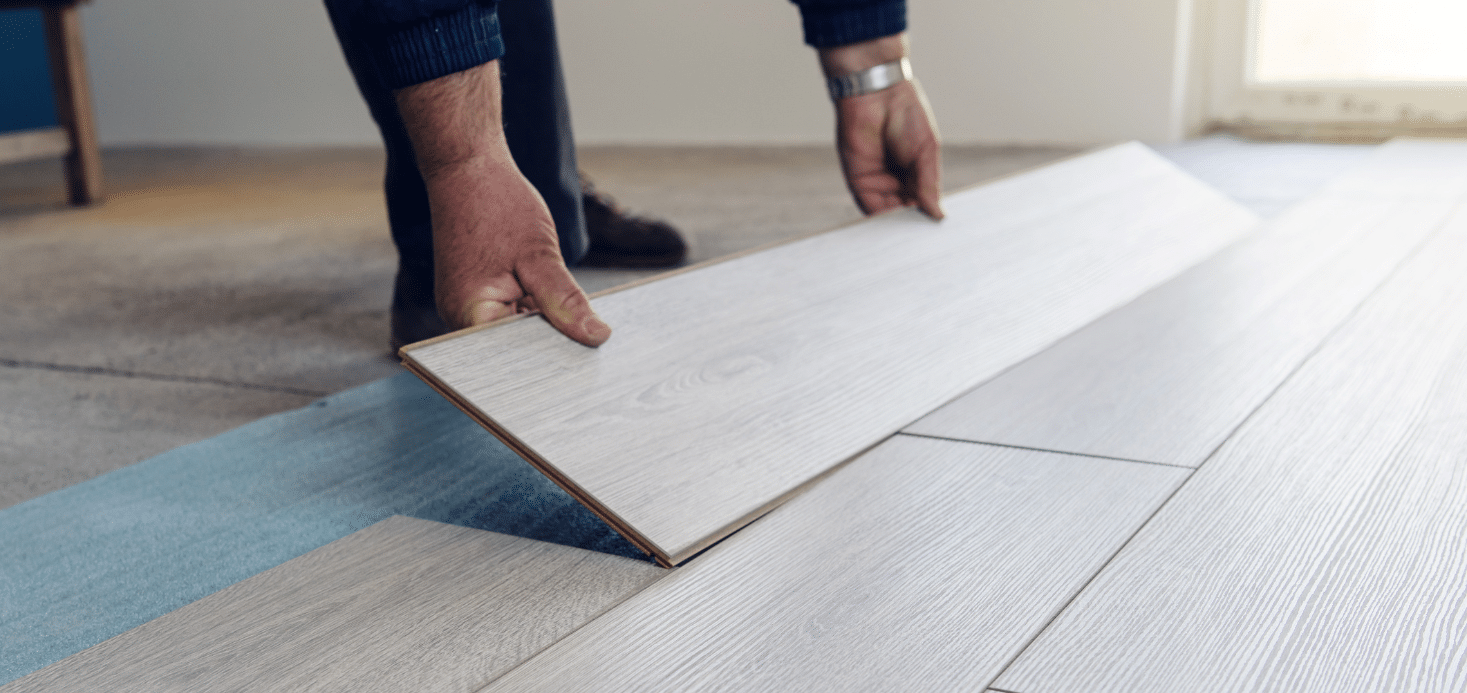
Underlayment is the layer of material that’s installed between the subfloor and the flooring. It works as a part of your overall flooring system, which consists of the joists, subfloor, underlayment, and the flooring surface.
The purpose of underlayment is to provide necessary moisture control, sound deadening, warmth, and to minimize deflection, which is the bend or sag in the floor caused by loading.
Most modern vinyl flooring, such as COREtec or Happy Feet , comes with an attached underlayment or pad, often with a moisture barrier built-in – unless the pad is cork.
If the product you choose doesn’t have an attached underlayment, you can almost always install directly over the subfloor without one. But this may result in an unsatisfactory experience. If you want to maximize softness, warmth, moisture protection, and noise reduction, then underlayment is key.
Underlayment Thickness
You may hear that a good rule of thumb is to install vinyl over 1-1.5mm underlayment or cork. But making definitive statements about max thickness without considering the density and make-up of the material can cause problems. Always speak to a flooring expert if you have a particular question about your flooring and its compatibility with underlayment.
What About a Double Underlayment?
More is not always better, and with underlayment, too much can compromise the integrity of your floor’s locking system. Adding additional underlayment under vinyl with an attached pad can create too much cushioning, which causes the floor to come apart through use over time. That’s why double underlayment (more than one underlayment) is generally not recommended. Doing so can also void the warranty.
However, there are instances where you can install additional underlayment. For example, if your floor has an attached cork pad, you may want to also install a very thin moisture barrier. If you follow the manufacturer’s instructions, you will be fine. Following the manufacturer’s instructions exactly will also prevent voiding the warranty.
Underlayment Benefits
Underlayment can provide a confluence of benefits: noise reduction, cushioning, warmth, and moisture/water protection. When correctly installed, underlayment can minimize deflection, especially in the seams where the planks meet, to prevent stress to the locking mechanism.
Sound Reduction & Absorption
Underlayment can help you reduce noise, but it won’t completely mute the sound of footfalls or clomping feet.
When it comes to sound insulation for flooring, there are two main ratings to consider – IIC and STC. Impact Insulation Class (IIC) measures the ability of a floor to block impact noise, such as footsteps or a dropped book. Sound Transmission Class (STC) measures the ability to reduce airborne noise, such as voices and music from a sound system.
The higher the number of these ratings, the better.
The best underlayment for noise reduction will reduce both impact noise and airborne sound. If reducing sound is important to you, then you will want to pay close attention to a product’s IIC and STC ratings.
Cushioning & Deflection
In addition to sound absorption, underlayment can also make a noticeable difference in how your floor feels.
For example, a glue-down vinyl plank floor on concrete will feel harder and less comfortable than a floating floor with foam underlayment.
Just remember that too much cushioning can cause the joints to come apart and the floor to unlock.
Moisture Barrier
Even though vinyl flooring is waterproof, your subfloor isn’t. That’s why an underlayment acting as a moisture barrier is essential. A dedicated moisture barrier helps prevent damage before it starts.
Warmth
Underlayment has thermal properties that can increase the warmth of the floor. Select an underlayment with a thermal R rating to help keep your floors warm.
Know that underlayment can only do so much to keep your floors warm, especially on concrete floors in your basement.
Vinyl flooring has a reputation for being cold, so if that’s a dealbreaker, then you may want to consider an alternative like laminate, which is warmer and feels softer. Or else you can look into radiant heating systems.
The Different Types of Underlayment
The most used types of underlayment for vinyl are cork, foam, felt, rubber, plywood, and OSB.
Cork
When it comes to reducing noise in your home, cork is an excellent option. Cork is dense and can help hide imperfections in the subfloor.
If your vinyl flooring already has an underlayment, you can add compressed cork to further enhance sound insulation. However, cork is not a moisture barrier. Cork will retain moisture, which can lead to mold formation, especially if it isn’t properly installed.
Installing over a concrete slab with cork underlayment? Always lay down a moisture barrier before installing the floor.
Foam
Foam is a cost-effective underlayment that provides some cushioning and limited insulation with average sound dampening. The thicker the foam, the better the results. You just need to be sure to install it correctly.
Foam underlayment is not a moisture barrier and can act as a water trap, leading to mold and must.
Felt
Felt is a popular underlayment choice, offering better sound control than foam. With foam, you also have the option to choose an attached vapor barrier, and it provides better insulation than foam and cork.
Particle Board
Particle board is an inexpensive way to lay a level base under vinyl flooring; however, it’s ineffective against moisture, a pain to install, and difficult to remove.
Rubber
Rubber underlayment is an effective underlayment, great for absorbing sound, adding warmth, and protecting against water damage.
Plywood and OSB
Plywood and OSB provide a nice and level base for LVP and LVT floors, but don’t offer warmth or cushioning. OSB offers better durability than plywood.
Underlayment & the Subfloor
The subfloor is the foundation of any flooring installation, and its importance cannot be overstated. A smooth and effective installation of vinyl flooring requires a solid and stable subfloor that provides a strong base for the new flooring material.
No underlayment or vinyl flooring product can make up for a poor subfloor.
Installing vinyl on a rough, unclean, or damaged subfloor is like trying to build a cabin on unstable ground – it just won’t stand the test of time.
When the floor isn’t as level as possible, the floor can drop in the low spots and cause damage to the planks. But no subfloor is going to be perfectly level. Your subfloor can have a pitch to it, but you need to avoid peaks and valleys.
Ensuring that the subfloor is smooth, clean, mostly level, and free of damage (cracks) is necessary for a flawless installation. A solid and level subfloor eliminates many problems: loud creaking, dips, high spots, soft spots, bumps, and uneven lumpiness.
This is why it pays to take care to properly prepare your subfloor. You can think of it as an investment in the longevity and performance of your vinyl flooring.
What About Leveling Agents?
You can use leveling agents, but they should be your last option.
Concrete
If your vinyl flooring has a pad attached, you can install it directly over the concrete subfloor. If you don’t have a pad attached then consider using a 1mm or less foam pad to help the floor float properly.
Before you install your underlayment and flooring, repair any hairline cracks in your concrete subfloor and make sure you level it out.
Over a concrete subfloor, you need a Class I moisture barrier to prevent moisture from moving up and sitting beneath your flooring.
If you install over concrete without any underlayment, there is a good chance that small amounts of moisture will be absorbed into the concrete because it’s porous.
Wood
¼” plywood works well as a subfloor for vinyl, and you can install vinyl directly over wood. Over a wood subfloor, you need a Class II moisture retardant.
If your wood subfloor is old and worn with holes, gaps, and cracks, you can use a liquid leveling agent to create a smooth surface.
Existing Floors
If you have existing linoleum, wood, sheet vinyl, or tile that are level and in good condition, congratulations, you have a great foundation for installing vinyl. Never install over floating laminate or LVP/LVT.
You will save time by installing over the existing floor instead of removing it.
If you are considering tile-look alternatives, luxury vinyl tile (LVT) offers a waterproof, low-maintenance option worth exploring.
What if Your Subfloors Vary in Height?
If you have rooms with subfloors of different heights, it’s probably for a good reason. You will want to keep in mind the floor’s thickness and come up with a plan to manage the height difference.
With a 2mm – 1″ difference, you can hire a professional to even your subfloor.
Looking for the easiest and least expensive solution? Use transition molding from one floor to the other. Reducer molding transitions height differences smoothly.
If you have another type of flooring in your home that’s a particular height, you can choose the flooring thickness and underlayment thickness to be on par with that flooring.
For example, if you have tile installed that’s 6mm thick, you can install 5mm thick vinyl flooring with a 1mm underlayment to create a seamless transition from one floor to the next.
Pro Tips for Installing Underlayment for Vinyl
- Do not install vinyl over a heating pad; heating pads are reserved for flooring that adheres to the subfloor, such as ceramic tile.
- Avoid electric radiant heat because it can cause your floor’s locking joints to fail.
- Do not install vinyl over carpet underlayment because it will be too soft, and over time, the planks will come apart.
- Do not install over another floating floor, such as laminate, because laminate floors can buckle and shift.
- Do not put underlayment on only half of the floor. Use it on the entire floor or don’t use it at all.
- If you have an older home with asbestos present, use asbestos encapsulant to seal it and install ¼” plywood over top before putting down underlayment.
- You don’t need underlayment for sheet vinyl, but it can help to smooth out the imperfections.
The Best Underlayment for Vinyl Flooring
Flooring professional Brandon Bembenic recommends Whisper Step as the best underlayment for all flooring installs, especially vinyl.
“The best underlayment to use for vinyl flooring is Whisper Step. The reason we sell so much of it and recommend it is that it is basically universal – you can put it under floating floors, nail-down floors, or glue-down floors; vinyl, laminate, engineered wood, or solid wood. It provides Class II moisture control and sound deadening and minimizes squeaks and creaks.”
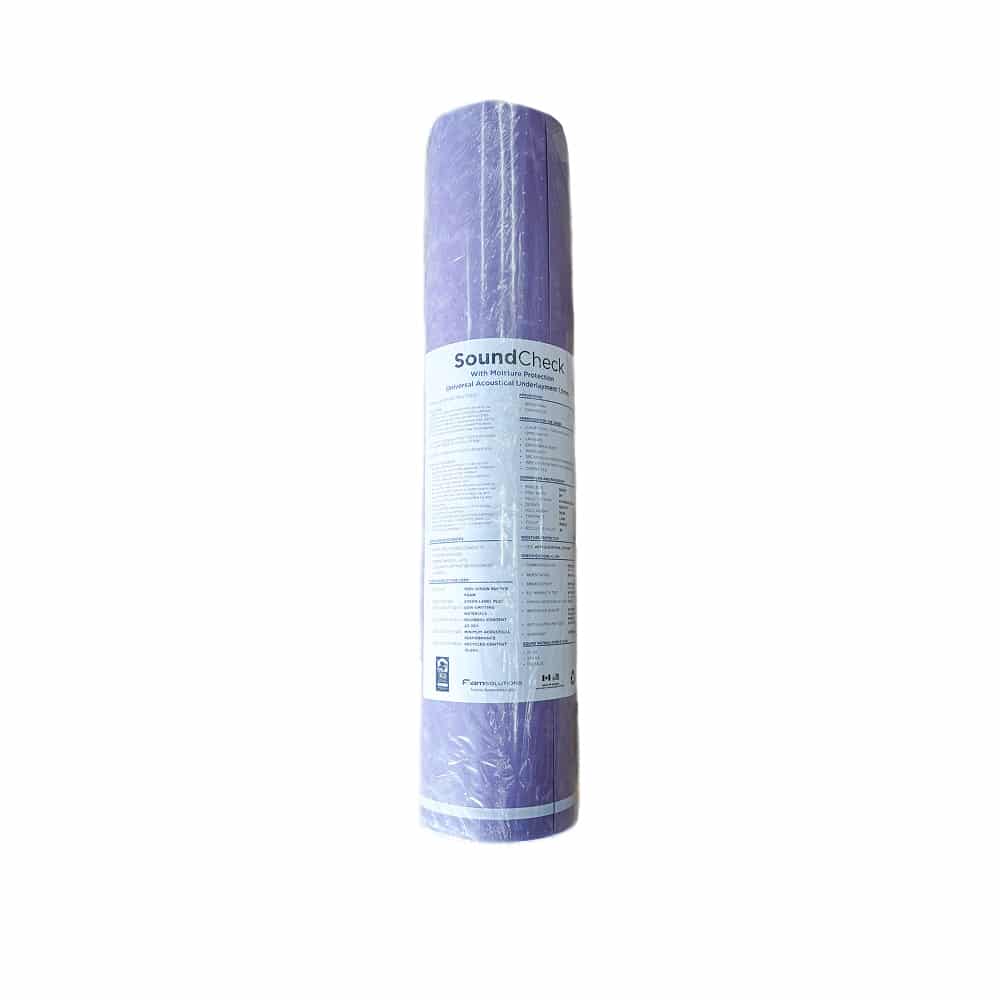
We currently recommend SoundCheck™ for online orders. This product is comparable to Whisper Step.
If you don’t want to be bogged down by the details of what you can and can’t use but desire a quick solution that also offers the best results possible, go with SoundCheck.
SoundCheck™ Over a Wood Subfloor
SoundCheck™ serves as a Class II moisture retardant, so it’s all you need over a wood subfloor.
SoundCheck™ Over a Concrete Subfloor
You will need a Class I moisture barrier (6mil plastic) in addition to SoundCheck over a concrete subfloor.
Summary
Choosing underlayment for vinyl flooring can be a confusing process that leaves you with more questions than answers. You have to consider many variables, such as your budget, the underlayment, your vinyl floor, and subfloor type.
Installing the wrong underlayment can compromise the integrity of the floor and leave you with problems to fix. It can also void the warranty. That’s why it’s important to make sure your subfloor is as level as realistically possible (and smooth) and that you find the right underlayment.
Underlayment isn’t always required to install vinyl flooring, but it can make all the difference. Our customers have had great success with Whisper Step and SoundCheck™, and we recommend them as our preferred underlayments for vinyl flooring.
Frequently Asked Questions
Do I need LVP underlayment if my vinyl plank flooring already has a pad attached?
In most cases, no. Adding a second layer of underlayment under luxury vinyl plank flooring that already has an attached pad creates too much cushion. That excess softness puts stress on the locking system and causes planks to separate over time. It can also void your manufacturer’s warranty. The one exception is cork. If your vinyl flooring has an attached cork pad (which does not block moisture), you may need to add a thin moisture barrier underneath. Always check the manufacturer’s installation instructions before making that call.
What is the best underlayment for vinyl plank flooring over a concrete subfloor?
Concrete is porous and naturally wicks moisture upward, so the best underlayment for vinyl plank flooring over concrete needs to address that. We recommend SoundCheck™ Acoustical Underlayment paired with a 6mil plastic moisture barrier beneath it. SoundCheck provides Class II moisture retardancy and sound deadening, but concrete requires a Class I moisture barrier for full protection. Lay the 6mil plastic sheeting down first, then install SoundCheck on top before your flooring goes in. If you skip the moisture barrier on concrete, you risk mold growth and damage to the subfloor over time.
Can I use the same underlayment for vinyl flooring that I use for laminate or hardwood?
It depends on the product. Some underlayments, like Whisper Step and SoundCheck™, are designed to work across multiple flooring types, including vinyl, laminate, and engineered hardwood. That versatility is one of the reasons we recommend them. However, not all underlayments are rated for every flooring type. Thicker foam products intended for laminate may be too soft for vinyl and can compromise the click-lock joints. If you are working on a project with multiple flooring types across different rooms, a universal underlayment for vinyl flooring simplifies the job and reduces the chance of using the wrong product in the wrong room.
How thick should LVP underlayment be?
For luxury vinyl plank, keep your underlayment at 1.5mm or thinner. Going thicker creates too much give, which stresses the locking mechanism and can cause the planks to unlock or shift. Density and composition matter more than thickness alone. A high-density 1.5mm product like SoundCheck™ will outperform a thicker, low-density foam when it comes to sound reduction, deflection control, and long-term durability under foot traffic. If you need additional guidance on choosing the right flooring thickness and how it works with underlayment, our thickness guide breaks it down.
Your Title GDoes underlayment for vinyl flooring help with sound on upper floors or in apartments?oes Here
Yes, and it is often required. Many multi-story buildings and HOAs have minimum IIC (Impact Insulation Class) and STC (Sound Transmission Class) ratings that your flooring assembly must meet. The right underlayment for vinyl flooring can significantly reduce impact noise (footsteps, dropped objects) and airborne sound (voices, music) that travels between floors. Cork and high-density felt tend to score highest on acoustic ratings. If sound control is a priority for your project, check the IIC and STC numbers on the product spec sheet and compare them to your building’s requirements. For a deeper look at how vinyl floors compare to laminate in terms of sound performance and feel, we cover that in detail as well.
Shop Panel Town & Floors Today
Ready to get started on your project? Shop underlayment or browse our full selection of luxury vinyl plank flooring at Panel Town & Floors.