


Wire-brushing changes how a floor looks, feels, and hides wear far more than it changes how you live with it.
Yes, fine dust and grit can settle into the grooves. But normal vacuuming and a hardwood cleaner handle that, and it shouldn’t be what decides whether you buy a floor you otherwise love.
What’s worth paying attention to is how heavily the floor was brushed. That’s the main difference between one wire-brushed floor and another.
Browse our wire-brushed hardwood flooring.
What wire-brushing actually does to the wood
Wire-brushing happens at the factory. It works with the wood’s own growth rings rather than against them. Every ring has earlywood, the softer, lighter band that grows fast in spring, and latewood, the harder, darker band that grows late in the season.
Steel brushes run along the length of the board and scrub the earlywood out. The latewood won’t give, so it’s left standing above the surface. A finer abrasive brush usually follows to clean up splinters and smooth the valleys, and then the finish goes down over the whole thing.
The texture you feel is the tree’s own structure, not a coating sprayed on top.
If you have ever seen hundred-year-old barn siding with the grain standing up off the face of the board, that’s the same thing happening without a machine. Wind, rain, and sun wear the soft wood away and leave the hard grain behind. Wire-brushing does in one or two passes what weather takes decades to do.
The brush itself hits the whole board with the same pressure and has no idea where the grain is. The wood does the sorting. That’s why the texture always lands on the grain.
Run your hand over a sample and you will feel it right away. Instead of the flat surface of a smooth floor, you get ridges and grooves that follow the grain. That’s the appeal. Rather than sanding the grain flat and burying it under finish, wire-brushing brings out the pattern the tree already had. It gives you something you can feel and see.

How wire-brushed floors handle dirt and grit
Technically, they do hold more. Those grooves give fine dust and grit somewhere to settle instead of sitting on top where a quick sweep picks it up. There’s no getting around that.
In practice it’s a small change to your routine, not a reason to pass on the floor.
You will notice it most where two things stack up: heavy texture and heavy traffic. Entryways, hallways, kitchens, and mudrooms take the worst of it because grit gets tracked in from outside and ground into the floor before anyone sweeps it up.
On a heavily brushed board, some of that debris settles down into the grain instead of staying on the surface. On a light-textured floor in a bedroom, it may never happen.
Herman, flooring specialist at Panel Town, says customers do notice dirt getting into the grooves. In his experience, you have to stay on top of cleaning, which is why wire-brushed floors can be tougher in commercial spaces.
Floors get dirty through use, and that’s true of smooth hardwood too. With the right supplies and a routine you actually stick to, cleaning is simple.

Wire-brushed is a spectrum
Wire-brushed doesn’t describe one texture. One wire-brushed floor can feel nearly smooth while another has grooves you can catch a fingernail on. Both get the same word on the spec sheet.
There’s no industry scale for light, medium, and heavy. Manufacturers don’t publish a brush-depth number. Each collection gets brushed once or twice at the factory at whatever intensity that manufacturer chose.
That’s why shopping for wire-brushed flooring really means comparing collections and finding the texture you like.
Herman says the aggressiveness of wire-brushing varies from vendor to vendor:
“Robbins tends to be very lightly brushed, Sheoga is more aggressive, and Lauzon falls somewhere in between.”
Light brushing
A light pass barely disturbs the surface. You get a little more grain definition, mostly when light hits the board from an angle, and the floor still feels close to smooth. This is the right end of the range for a modern or minimal room where you want real wood warmth without a rustic look.
Medium brushing
Most collections land here. You can see and feel the grain clearly and cleaning stays easy.
Heavy brushing
Heavy brushing leaves pronounced grooves and a lot of movement across the board. It’s also the most forgiving option in a house with kids, big dogs, or a busy back door because a new scuff has plenty of existing texture to disappear into.
Herman agrees. “Dog toenails and wirebrushed floors go together perfectly.”
The tradeoff is that deeper grooves hold more grit and ask for a little more attention when you clean.
The pattern holds all the way across the range. The deeper the texture, the better the floor hides wear, and the more deliberate you have to be about cleaning it.
How to tell how deep the texture is before you buy
Photos only get you so far. Lighting and camera angle change how deep a texture looks in a listing photo: an angled shot with strong side light can make a light brushing look dramatic, and flat, even lighting can make a heavily brushed board look tame. Most product descriptions just say “wire-brushed” and stop there.
So don’t judge texture from a thumbnail. Here’s what you can do:
- Look for close-up photos, and look at the board from an angle rather than straight down.
- Order a sample of anything you’re seriously considering. The bigger the sample, the better.
- Run your hand across it. Ten seconds of that tells you more than an hour of scrolling.
- Look at it in the room where it’s going, in daylight and under your own lights at night.
If you’re close enough to visit, feeling a lightly brushed board and a heavily brushed board back-to-back in the showroom settles it fast. If you’re not, get in touch and we can get a sample out to you.
How to clean a wire-brushed floor
The goal is keeping grit from building up in the grain and getting ground into the finish.

Vacuum with a soft floor-brush attachment rather than a beater bar. A rotating beater bar is built for carpet, and on hardwood it does nothing for the grooves and can scuff the finish.
Give the entryway, the kitchen, and the main traffic paths more passes than the rest of the house.
Then clean with a hardwood-specific cleaner and a microfiber mop or pad. Squeaky Cleaner and Bona Pro Series Hardwood Floor Cleaner are two of the best we carry.
Both are formulated for wood finishes, so they lift dark spots and dirt without leaving residue behind in the grooves or damaging the finish.
Shop our floor care and maintenance products for the essentials.
Wire-brushed vs. smooth hardwood
Smooth hardwood gives you a flat, uniform surface. Dust comes off easily because there’s nowhere for it to hide, and the look is clean. The catch is that scratches and dents show, especially on a dark floor or a higher-gloss finish.

Wire-brushed hardwood trades a little of that easy cleaning for a surface with grain you can feel and wear that blends in instead of standing out.

Neither one is better. Smooth is usually the right call if you want a uniform surface. Wire-brushed is usually better if you want to see and feel the wood, and you would rather have a floor that doesn’t need to look untouched to look good.
Herman would steer someone looking for a classic, traditional look toward a smooth floor. He sees wire-brushing as the more modern look.
Wire-brushed vs. hand-scraped hardwood
Both are textured, both hide wear, and both turn up when you search hardwood flooring, but they’re different processes with different results.
Wire-brushing stays tied to the grain, so the effect is consistent plank to plank, and the grooves sit where the wood’s own figure puts them. Hand-scraping ignores all of that. It’s done by hand, or by a machine set up to look like it was, and it leaves irregular dips, waves, and tool marks that change from board to board.
Wire-brushing runs anywhere from subtle and contemporary to heavily rustic depending on the species, color, and depth of the pass. Hand-scraping leans toward rustic, farmhouse, traditional, and old-world.
If you’re picturing wide white oak planks in a natural color in a modern organic or Scandinavian-style room, that’s wire-brushed. If you’re picturing boards that look like they’ve been in a farmhouse for eighty years, that’s hand-scraped.
Species that take wire-brushing well
Species with strong, open grain show wire-brushing most clearly because there’s a bigger density gap between the earlywood the brush removes and the latewood it leaves behind. Oak, ash, and hickory have that gap. Maple and cherry show much less texture.
White oak is the most common choice by a wide margin; its grain gives the brushing plenty to define. The effect ranges from nearly invisible to strongly textured depending on the collection. Hickory already has dramatic color and grain variation on its own. Brushing pushes it further, so it’s worth a look if you want a floor with obvious character. A more uniform species shows less contrast from the same pass.
Four Wire-Brushed Floors That Show the Range
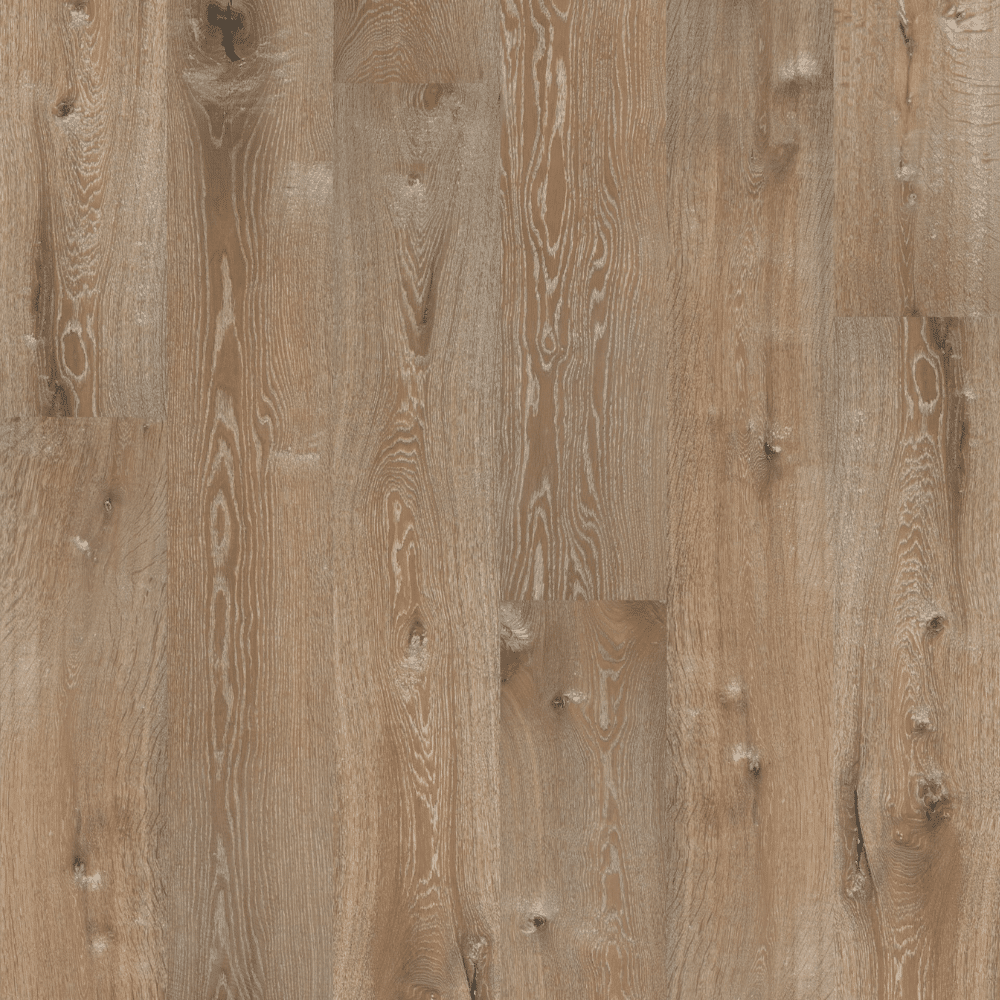
Duchateau Grande Savoy White Oak Marquis
This floor gives you a refined look rather than rustic. Duchateau states the texture level outright: “planed and lightly wire-brushed.” It’s European white oak with a UV oil finish.
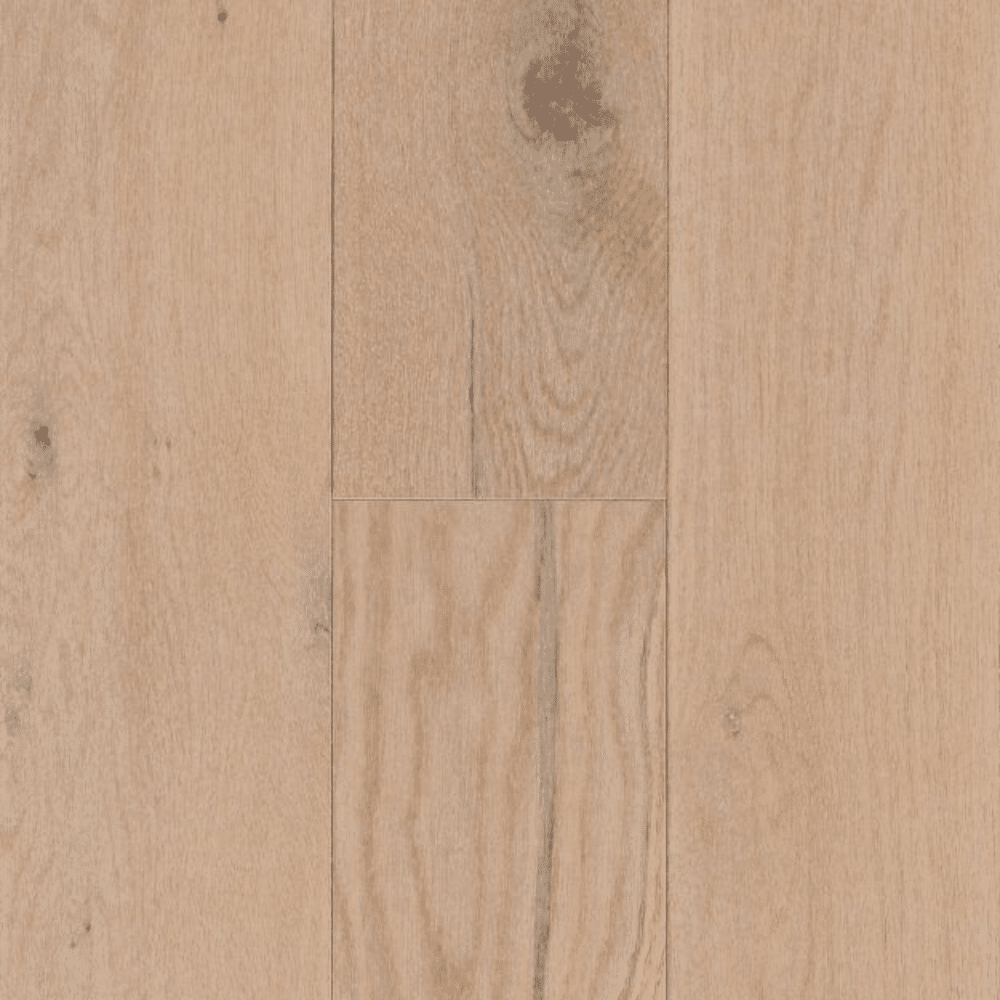
Robbins rates the ArmorWood finish at 6 times the dent resistance and 4 times the scratch resistance of standard hardwood. A great-looking wire-brushed floor that’s great for dogs.
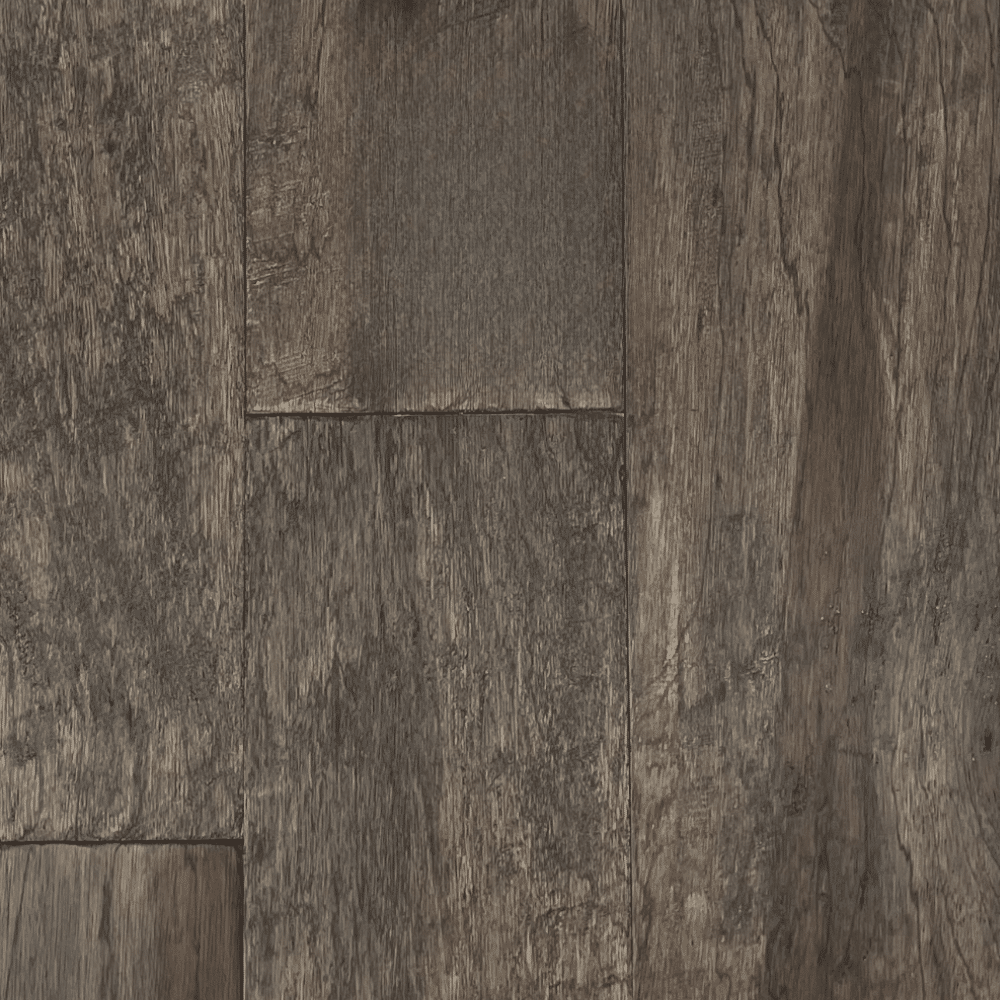
IndusParquet Langania Hickory Bertrande
This floor combines wire-brushing with hand-scraping. You get both kinds of texture on one board, and hickory’s grain contrast makes the most of it.
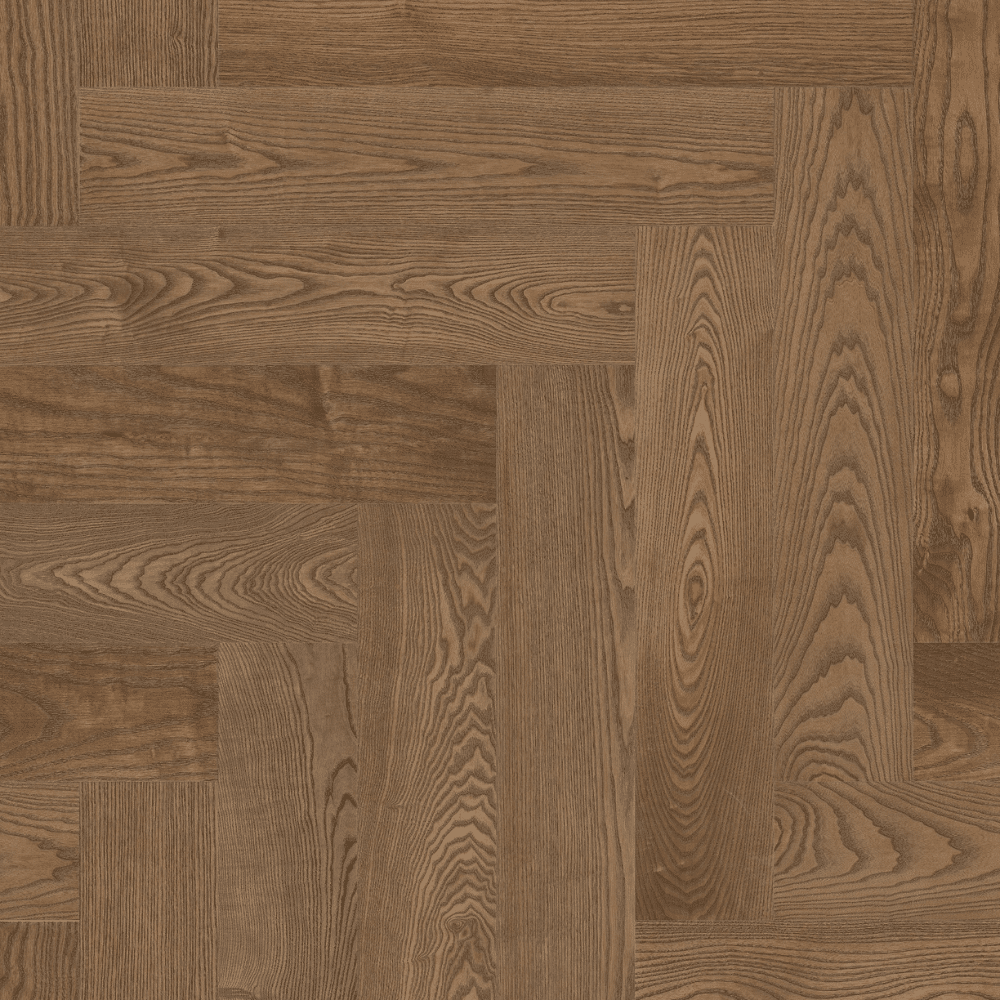
Anderson Tuftex European Ash Herringbone Biscotti
A refined wire-brushed texture in a herringbone layout where the pattern does most of the work with brushing that elevates the grain.
Summary
Wire-brushed hardwood ranges from barely textured to deeply brushed, and that difference matters more than the label itself. Light brushing gives you subtle grain definition. Heavier brushing gives you more texture and does a better job hiding everyday scratches and scuffs.
The best way to choose is to get the floor in front of you. Order a sample, run your hand across it, and look at it under the lighting in your home. If you’re near Panel Town, come into the showroom and compare a few boards side by side.
You can also browse our wire-brushed hardwood collections and contact us if you want help narrowing down your options.


