


Most stain color mistakes happen before the stain is ever opened. Homeowners choose a color from a printed swatch or a phone screen, only to see it looks completely different on their floor.
Here’s the thing nobody tells you when you’re picking a stain color: the name on the can isn’t the color.
The color is the stain plus your wood. Dark walnut on red oak and dark walnut on white oak are two different floors. Dark walnut on a printed sample card is a third thing entirely, and it’s the least accurate of the three.
That gap between the swatch you approved and the floor you got is behind more stain regret than any other single mistake.

DuraSeal dark walnut printed swatch, on real white oak, and real red oak.
The fix isn’t complicated. It’s a three-step process: shortlist from a fan deck, verify on real wood, and confirm with a sample on your actual floor. This guide walks through all three, plus the reasons the shortcuts fail.
Why Stain Colors Look Different
Stain is semi-transparent. Unlike paint, it doesn’t cover the wood; it soaks in and tints it, so everything underneath participates in the final color. The species, grain pattern, how the boards were cut and sanded, and the finish that goes on top all shift the final look.
That’s why the same can of stain produces visibly different floors in different houses. It’s also why a printed color card can only ever give you an idea of how the stain will look.
Paper has no grain to absorb pigment and no wood tone underneath. A screen is worse: your monitor adds its own color cast on top.
None of this means paper fan decks, online product swatches, or flooring visualizers are worthless. They do help.
With the first step.
Red Oak vs White Oak: The Difference Surprises People
The two most common hardwood floors in America take stain differently. And the difference is big enough to change your color choice.
Red oak has warm, pinkish undertones and an open, prominent grain. Stains tend to look warmer, and the grain telegraphs through the color, especially with darker shades.
By contrast, white oak has a cooler tone, a brown and tan color, with a tighter grain, so the stain sits more even and neutral.
This matters most at the extremes. Light and gray tones fight red oak’s pink undertones, and what looks like a clean greige on a white oak sample can look warm on a red oak floor.
Dark brown stains close the gap between the species, but the grain still shows more on red oak.
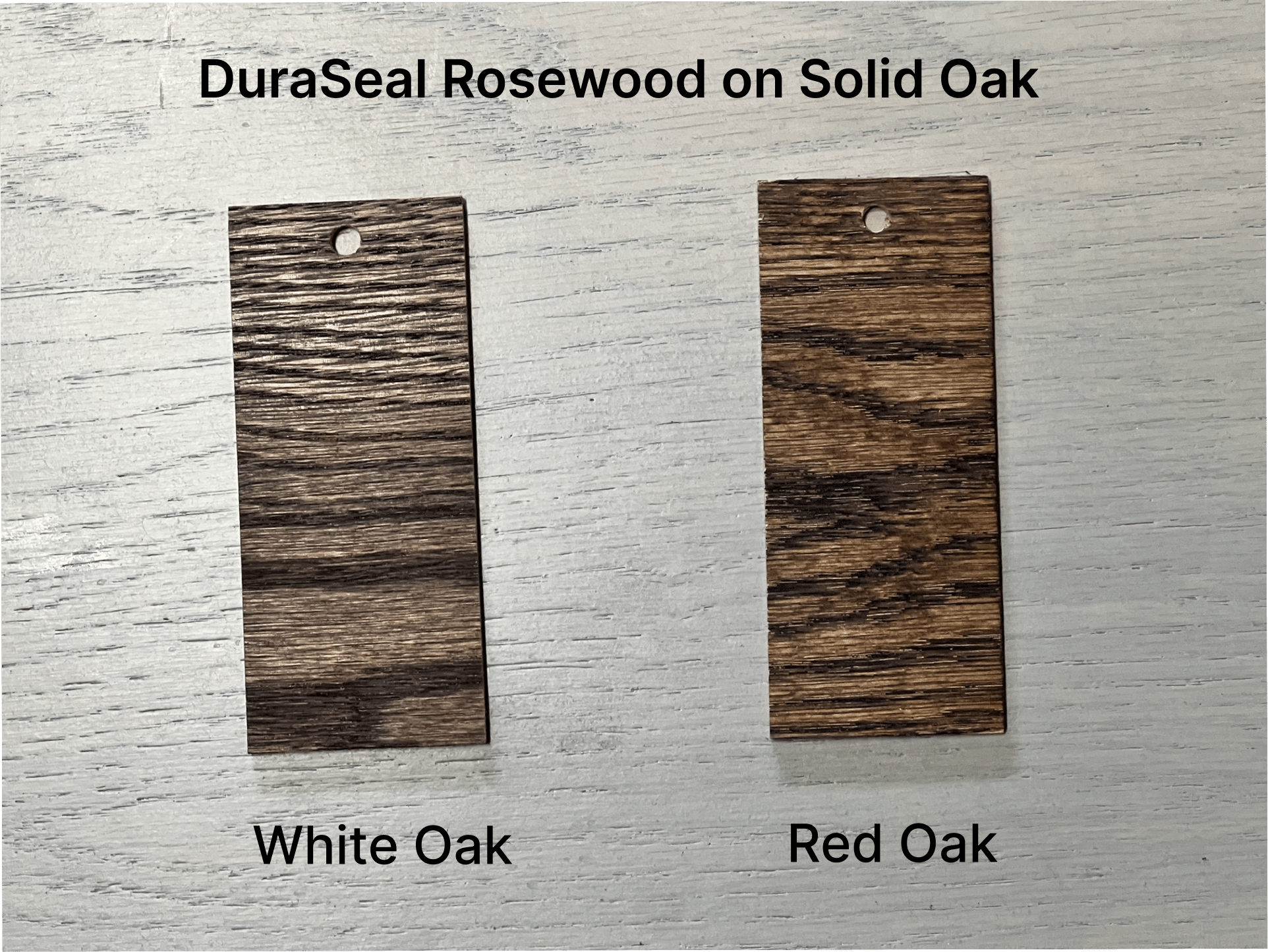
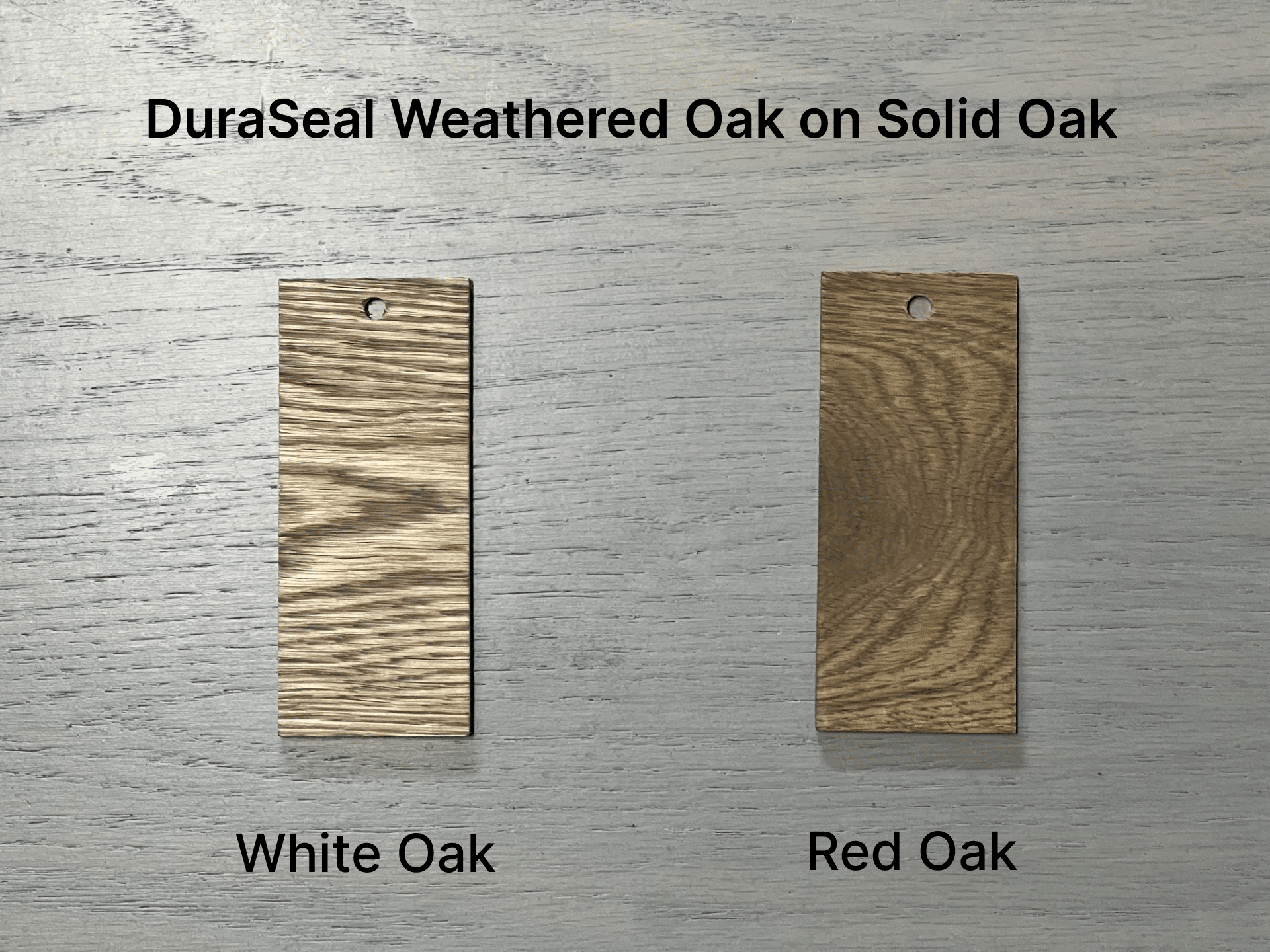
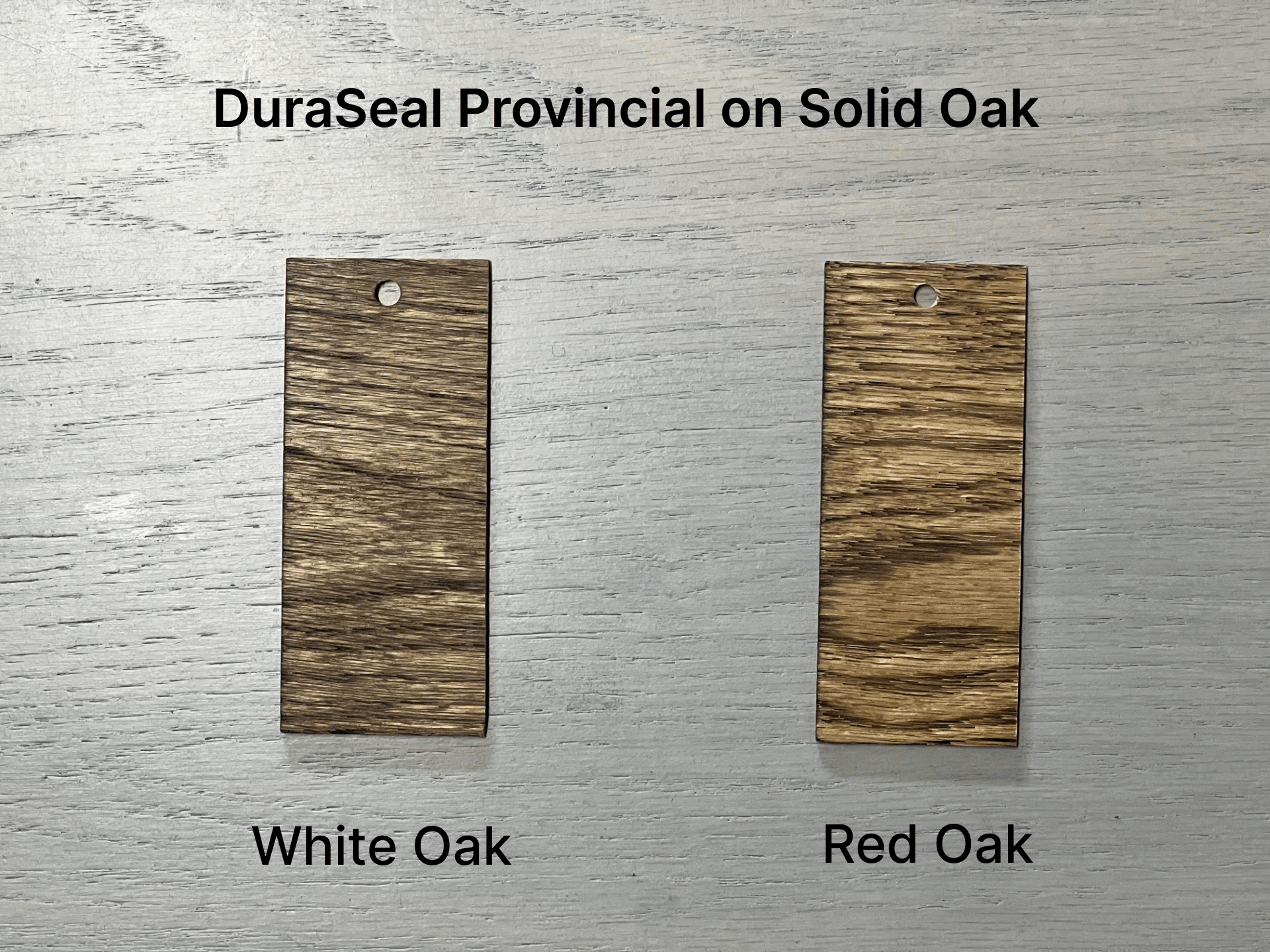
This is exactly why we hand-make our fan decks on both species. If you’re staining red oak, look at colors on red oak. It sounds obvious, and yet it’s still the step most people skip.
Step One: Shortlist with a Fan Deck
Step Two: Verify on Real Wood
This is the step that separates a confident choice from a guess. It’s another reason we started hand-making our own fan decks. You make the best decision using real stain, applied by hand, on real wood.

Because the swatches are actual stained oak, you can see exactly how the stain will look in the space.
Colors shift with light. A brown that looks rich in the showroom can go muddy in a north-facing room. A gray that looks modern at noon can turn blue at dusk.
Fan out your finalists in the actual room, morning and evening, before you decide anything.
For contractors, the deck pays for itself on the first consultation. Handing a client real stained wood instead of something that feels like a brochure shortens the color conversation and cuts down the “that’s not what I picked” callbacks later.
Step Three: Sample on Your Actual Floor

The stain on wood fan deck takes you from the full line down to two or three finalists. The floor makes the final call.
Have your floor finisher apply each finalist to a sanded section of the actual floor, ideally a few square feet per color, in the part of the room that gets the most light. Look at the samples in the morning and again at night. Live with them for a day at least if you can.
Two details worth knowing for this step:
Sample with the same finish going on top. The finish coat shifts the final appearance too. An oil-based polyurethane adds amber warmth over the stain while most water-based finishes stay closer to the raw stained color.
Read our guide on water-based polyurethane if you’re weighing the two.
That said, don’t let the process paralyze you. Don’t stress. It should be an enjoyable part of the process. As long as you have checked your finalists on a real-wood fan deck and confirmed the winner on your own floor with the right prep and finish, you have done everything a professional would do.
Which Fan Deck Should You Buy?
FAQ
Why does my stained floor look different from the sample I approved?
Usually because the sample was on a different species, a different prep, or paper/screen. Stain is semi-transparent, so the wood underneath contributes as much to the color as the stain does. Approving colors on real wood that matches your floor closes the gap.
Do stain colors look different on red oak and white oak?
Yes, visibly. Red oak’s pink undertones and open grain pull stains warmer; white oak’s cooler base keeps the color more even and neutral. You will see the biggest difference comes when you apply light and gray tones.
Are fan deck samples real stain?
Panel Town’s hand-made decks are real stain applied to solid red oak or white oak. Manufacturer decks from Bona, Loba, and Rubio Monocoat are printed color references that can be useful to get started.
Can I skip the on-site sample if I have a real-wood fan deck?
We don’t recommend it. The deck shows you the true stain color on the species, but your specific floor’s age, sanding, and finish still nudge the result. These particular samples come with stain applied but without finish. An on-site sample is cheap insurance on a decision you’re going to be living with for a decade or more.
What's the most popular stain color right now?
Warm browns and natural looks have taken the lead over the cool grays that dominated the 2010s. That said, the best color is the one that works with your wood, lighting, cabinets, and style. See our guide to popular hardwood floor stain colors for ideas.
Summary
Choosing a stain color goes wrong when people trust the wrong sample: a brochure, a screen, or the same color on a different species.
It goes right when you move through three steps in order. Shortlist from a printed fan deck, visualizer, and product swatch. Verify your finalists on real wood that matches your floor, and confirm the winner with an on-site sample under your own lighting.
Our hand-made fan decks exist for that middle step. At $69.99 they cost about the same as one quart of wasted stain and an hour of re-sanding.
Shop the full fan deck collection, or call the shop at 614-488-0334 and our NWFA-certified team will point you to the right deck for your species and stain line.


